
HB Partner Webinars on the West LegalEdcenter
Take these CLE webinars on the West LegalEdcenter platform. Each program features leading litigators in their respective fields on emerging subjects. Speakers and topics are handpicked by HB. Your organization may have already subscribed to the platform, but each session is also available for individual purpose. For questions or if you wish to propose a webinar, write to us at: Webinars@LitigationConferences.com.

Podcast: Charlie Kingdollar on Social Disparagement
HBLC · HBPC Charlie Kingdollar Social Disparagement - 10:8:20, 7.57 PM Charlie Kingdollar spent more than four decades with General Reinsurance, three-quarters of which as the company's Emerging Issues Officer. One colleague described him as "one of the most prescient and gifted industry futurists I have met in my 36 year professional career within the insurance industry. Entertaining and insightful, his ability to digest and communicate complex issues, many before they are readily apparent, is both a gift and a talent." Follow him on LinkedIn. Charlie Kingdollar on Social Media Disparagement Are the risks posed by social media -- which has added jet fuel to one person's ability to smear another -- adequately addressed by the insurance market? It was my pleasure to interview Charlie for our first emerging issues podcast. It's based on his article on social disparagement which will be featured in the inaugural issue of the Journal on Emerging Issues in Litigation (JEIL), which will release in January 2021. JEIL is a collaborative project between HB and the Fastcase legal research family, which includes Full Court Press, Law Street Media, Docket Alarm and, most recently, Judicata. If you have comments or wish to participate in one our projects, or want to tell me how awesome Charlie is, drop me a note at Question@LitigationConferences.com. We hope you enjoy the interview. Tom Hagy Founder & Managing Director HB Litigation Conferences Download Charlie's article as a preview of the Journal of Emerging Issues in Litigation.

Cryptocurrency Article and Webinar
Cryptocurrency: The Good, The Bad, and the Tricky According to a recent Visual Capitalist article, there are now more than 5,000 cryptocurrencies in circulation, fueling an exploding $200 billion industry. Clearly it is a boom time for virtual asset service providers, or VASPs, like cryptocurrency exchanges and wallet providers. Despite its notoriety, mystique still surrounds cryptocurrency, from its use of blockchain technology, to the benefits and weaknesses of trading decentralized money, to national security implications. With crypto’s rise comes global implications. Its use often makes its way into headlines about criminal activity, such as the recent arrest of a 19-year-old and his friends for their alleged roles in a highly publicized Twitter hack. Forensic tools are in a constant state of development. For example, blockchain analysis tools assisted investigators in quickly identifying the young Twitter hackers, according to a post on the CipherTrace blog. Two Sides of the Digital Coin. There are many upsides to cryptocurrency. Transactions are secure without bank oversight. They can be processed at any time, not just during business hours. It has purchase power anywhere. Finally, cryptocurrency may provide greater benefit to developing countries where the local currency may swing due to exchange rate instability. In such countries, and where many citizens may be unbanked, supplanting traditional coinage with cryptocurrency could stabilize finance and open its doors to many. With crypto’s rise comes global implications. Shortcomings generally are human ones; intermediaries, like unregulated exchanges, create vulnerabilities. The ability to use pseudonyms in executing crypto transactions makes it ideal for bad actors, criminal syndicates, and terrorists. According to the international Financial Action Task Force, the risk of money laundering and terrorism financing is increased through “chain-hopping,” or “quick exchanges between different virtual assets,” which “allows the multiple layering of illicit funds within a short timeframe, allowing money laundering networks to disguise the origins of funds [...]

James Beck on the Drug & Device Law Blog: Something Both Sides Should Agree On (re Class Actions)
Senior Life Sciences Policy Analyst Reed Smith LLP Drug & Device Law Blog: Something Both Sides Should Agree On (re Class Actions) We’ll be very clear – as we have before: We don’t like most class actions. Indeed, if given our druthers, we would abolish Rule 23, as it applies to class actions for damages, altogether. But that’s not in the offing anytime soon. Today, we offer a class action decision that we think both sides, us on the defense and those on the plaintiffs side, can agree on, excluding only those responsible for the problem. In Pearson v. Target Corp., 968 F.3d 827 (7th Cir. 2020), the court came up with one possible solution to the class action “objector problem.” What’s that? Well, once a class action settles (as most do), all too often “objectors” come out of the woodwork. While these objectors purport to assert the interests of the class, usually, all they want is money to make them go away. Or, as described in Pearson: We address here a recurring problem in class-action litigation known colloquially as “objector blackmail.” The scenario is familiar to class-action litigators on both offense and defense. A plaintiff class and a defendant submit a proposed settlement for approval by the district court. A few class members object to the settlement but the court approves it. . . . The objectors then file appeals. As it turns out, though, they are willing to abandon their appeals in return for sizable side payments that do not benefit the plaintiff class: a figurative “blackmail” by selfish holdouts threatening to disrupt collective action unless they are paid off. ... Read more at the Drug & Device Defense Law Blog.

Washington AG Sues Juul, Minnesota Judge Tosses RJR’s Suit to Overturn City’s Flavored Tobacco Ban, Verus Reports
Manager of Research Services Verus LLC klavin@verusllc.com 609-466-0427 Photo by Rubén Bagüés on Unsplash Litigation Update: Vaping and Flavored Tobacco Products Lawsuits The Washington state attorney general has filed a lawsuit in King County Superior Court against Juul Inc., alleging that the company knowingly targeted minors in its marketing campaign on social media in an effort to push its products on young consumers. In the suit, Attorney Bob Ferguson claimed that in using young models, brightly colored ads and candy-flavored vaping juice, Juul violated Washington state’s consumer protection laws and failed to meet state tobacco product licensing regulations which would make the sales of the company’s e-cigarettes unlawful between August 2016 and April 2018 .... In another tobacco-related case, U.S. District Judge Patrick J. Schiltz tossed out R.J. Reynolds’ lawsuit against Edina, MN over the city’s ban on flavored tobacco products. The company had claimed that Edina had overstepped its authority with a ban that was aimed at curbing vaping by younger consumers. In his ruling, Judge Schiltz wrote that the ban fell under a provision of the federal tobacco laws granting local governments the authority to regulate the sale of certain products .... Read more at VerusLLC.com.

Climate Change Litigation Expands with Addition of Hoboken, NJ’s Suit Against Big Oil
Excerpt of Sept. 2, 2020 post at HobokenNJ.gov. Decades-long campaign of misinformation has directly contributed to effects of climate change in Hoboken, City seeks relief for costs associated with climate adaptation efforts. Hoboken Mayor Ravi S. Bhalla today announced that the City of Hoboken has filed a lawsuit in Hudson County against Exxon Mobil, other Big Oil companies, and the American Petroleum Institute for a decades-long campaign of misinformation related to climate change and its devastating impact on Hoboken. According to the lawsuit, Big Oil companies have caused substantial harm to the public in Hoboken and New Jersey by actively lying about the detrimental effects of their products when in fact their own research indicated otherwise, all in order to generate multibillion dollar profits by producing, marketing, and selling vast quantities of fossil fuels. Big Oil engaged in a continuous practice of misleading the public about climate change and their role in it, directly resulting in adverse impacts in Hoboken including rising sea levels that jeopardize the long-term health of the City. Photo by Patrick Hendry on Unsplash “As a coastal community, Hoboken has directly felt the impacts of climate change, including rising sea levels and more frequent storms,” said Mayor Bhalla. “At the same time we’ve invested hundreds of millions of dollars adapting to the realities of climate change, Big Oil companies have engaged in a decades long campaign of misinformation that has contributed to global warming which has disproportionately impacted our residents. We cannot stand idly by and allow Big Oil to continue profiting at the expense of Hoboken residents. It’s time these companies pay their fair share and be held accountable for their actions.” Hoboken joins at least 19 other cities, states and counties across the country, and the first in New Jersey to [...]

Progress of Roundup Settlement in Question, Verus Reports
Manager of Research Services Verus LLC klavin@verusllc.com 609-466-0427 Progress of Roundup Settlement in Question Judge Would Likely Not Have Agreed to a Stay Had He Known About the Contingency On August 27, plaintiffs’ counsel in the multi-district litigation involving Monsanto and its widely used weed killer Roundup, advised the court that parent company Bayer AG appeared to be going back on the settlement agreement announced in June. At that time, the company had agreed to settle about 75% of the 125,000 claims filed by plaintiffs alleging that their non-Hodgkin’s lymphoma was linked to Roundup use; the settlement was for an estimated $10 billion. At the hearing, Judge Vince Chhabria advised that he had received confidential letters from a number of plaintiffs’ counsel with cases pending in the MDL who were concerned that Bayer AG was going back on the settlement, noting that the company had terminated settlement term sheets and refused to execute master service agreements that would finalize their settlements; Bayer conceded that there were currently no final agreements. Bayer did advise Judge Chhabria that about 667 of the cases currently pending in the MDL had been resolved, a figure that the judge noted was only a fraction of the 4,000 currently filed. The judge also pointed to Bayer’s June 24 announcement of the settlement, stating that he had taken “all of that to mean the MDL is settled." He indicated that he would likely not have agreed to a 60-day stay of the litigation had he known that the larger settlement was contingent on his approval of a separate class action settlement for $1.25 billion, designed to resolve any future Roundup cases. The judge then advised the parties that although he would not lift the current stay, he would not extend it, [...]

European Union’s Top Court Strikes Down EU-US Privacy Shield
European Union's Top Court Strikes Down EU-US Privacy Shield The Court of Justice for the European Union has invalidated the EU-US Privacy Shield as an approved mechanism for transferring personal data from the European Union to the United States. The Privacy Shield had been in place since October 2015, and enabled U.S. companies to more easily receive personal data from EU entities. The decision by the court “leaves many companies scrambling to implement alternative mechanisms to safeguard personal data transfers to the U.S.," says Sten-Erik Hoidal of Frederikson & Byron, P.A. With the invalidation of the privacy shield, companies are essentially left to decide on their own how data will be lawfully transferred. Attorneys from Perkins Coie recommend companies “consider amending any data processing addenda (DPAs) which companies have signed with vendors or customers to incorporate the EU Standard Contract Clauses.” Moving forward, U.S. and European companies will now attempt to create a new deal that complies with the privacy standards for transferring digital information. The first large company to weigh in on the decision, Microsoft tells customers that they “can continue to use Microsoft services in full compliance with European law” and that the ruling “does not change the data flows of our services to Consumers.” Photo by Tabrez Syed on Unsplash Send Us Your News

NJ Judge Overstepped in Striking Talc Plaintiff Experts, Verus Reports
Manager of Research Services Verus LLC klavin@verusllc.com 609-466-0427 Judge Abused Discretion in Striking Expert Evidence, NJ Appellate Court Finds Reverses 2016 Summary Judgment in Ovarian Cancer Cases On August 5, a three judge panel from the New Jersey state appeals court reversed a 2016 summary judgment granted in favor of defendants, talc manufacturer Johnson & Johnson and talc miner Imerys Talc America in cases brought by two women who allege J&J’s talc products caused their ovarian cancer. In its opinion, the panel ruled that Atlantic County Superior Court Judge Nelson C. Johnson abused his discretion by serving as the fact finder in deciding the credibility of the plaintiffs’ experts’ opinions instead of merely assessing whether the doctors’ opinions were based on sound scientific methodology. The trial judge acknowledged that the experts, Dr. Graham Colditz and Dr. Daniel Cramer, were qualified but opined that their scientific studies and evidence were narrow and shallow, showing a preference for cohort studies and their larger sample sizes over the case studies relied on by the experts. In overturning the ruling by the trial court and discussing the studies cited by Colditz and Cramer, the appeals court stated that those studies satisfied the criteria outlined in the Federal Judicial Center’s Reference Manual on Scientific Evidence and also noted that size and the types of study are not the sole determinants of reliability. As a result of the plaintiffs’ experts’ testimony being reinstated, a dispute over a material fact exists in the matter and the case will proceed. The two cases, brought by plaintiffs Brandi Carl and Diana Balderrama, were the first two to be tried from the group of 100 lawsuits included in New Jersey’s multi-county litigation.

Organizational Values & Business Risks: Properly Balancing Stakeholder Concerns
Accommodations. Appropriate accommodation for high-risk employees or employees with family members who are at a heightened risk. Mitigation. Attention to means of mitigating transmission and infection. Tracing. Contact tracing and management of data collected, including health data, as well as responses to employees who refuse to report. Patient Sensitivity. Duty to avoid discrimination and stigmatization. Preparedness. Developing plans to address possibility of re-occurrence in the fall and managing possible outbreaks in company’s offices. On-demand on the Thomson Reuters West LegalEdcenter as part of the HB catalog. Organizational Values & Coronavirus Business Risks: Properly Balancing Stakeholder Concerns Produced for Emory University Center for Ethics by HB Litigation Conferences The current pandemic confronts businesses, nonprofit organizations, governments, and the legal profession with innumerable ethical challenges. Management issues and liability concerns, stakeholder demands and legal duties become even more complex in an environment of uncertainty and one where the consequences could result in serious illness or even death. This program seeks to engage the participants in thinking through these challenges and developing processes of ethical response to them. Managers must acknowledge and address the framework of fear associated with the pandemic, ranging from fear of contagion and death to fears of unemployment, childcare, and the duties of home-schooling. Additionally, as the economy reopens there must be serious attention to the processes of doing so. Join Professor Edward L. Queen from Emory University for invaluable insights. Emory's medical team was on the frontline of the 2014-2016 Ebola epidemic, which began in December 2013 when an 18-month-old Guinean boy contracted the disease. According to the CDC, the outbreak ended with more than 28,600 cases and 11,325 deaths. Eleven people were treated for Ebola in the United States. Edward L. Queen Director of Ethics and Servant Leadership [...]

$3M Transferred in Fraud Scheme, Law Firm Gets Sued, Says It Followed Client Instructions
$3M Transferred in Fraud Scheme, Law Firm Sued, Says It Followed Client Instructions Two related foundations hired a big law firm to sell stock and execute a merger via wire transfer. Cyber fraudsters had other ideas. Posing as stock seller, and intercepting a verification email, the perpetrators grabbed $3.1 million. The foundations sued the firm in state court in Utah, claiming the firm should have red-flagged certain inconsistencies and known it was being duped. The firm should also have picked up the phone to verify the source of the fraudulent emails and documents. Not so fast, the firm maintains. The plaintiff was not a client and it was only acting on wiring instructions sent via the plaintiff's email system and provided the instructions to the paying agent. The money was sent to the account of an alleged furniture company in Hong Kong. Sorenson, et al. v. Continental Stock Transfer, Tassel Parent, and Holland & Knight, 3rd. Jud. Dist. Ct., Salt Lake Co., Utah. Download

Microsoft Sued Over Data Sharing in Class Action
Microsoft Sued Over Data Sharing in Class Action Consumers, including individuals and companies, filed a class action complaint against Microsoft in U.S. District Court for the Northern District of California, claiming the company shared consumer data without consent to subcontractors and third parties, including Facebook, despite policies that stated otherwise. The plaintiffs accused Microsoft of “misrepresenting its privacy and security practices, violating federal and state law, and illegally sharing and using its business-class Microsoft Office 365 and Microsoft Exchange customers’ data.” Read more from Law Street Media: https://lawstreetmedia.com/tech/microsoft-sued-over-data-sharing-in-class-action/
Facial Recognition Update July 2020
Facial Recognition Technology -- Emerging After Decades of Development -- Draws Lawsuits and Proposed Bans We sometimes forget that not all of the technical wizards who transformed our world were young “geniuses” jacked up on Starbucks, their shirttails hanging out in the ping-pong section of their open concept offices. Woody Bledsoe was born 99 years ago. As a young son of a sharecropper he demonstrated exceptional mathematical capabilities. Early in his career he had a dream: A machine that could think like a human, converse like one, and even recognize faces. This was as far back as the 1950s. This mathematician and computer scientist would go on to teach for decades at the University of Austin where he worked to advance automated reasoning and artificial intelligence. But what was his role in the development of the technology exactly? Did he perform work for a CIA front? And why, in his old age and suffering from the cruelty of ALS that would ultimately kill him in 1995, did he ask his son to set fire to a stack of old papers? Take a look at “The Secret History of Facial Recognition” written by Shaun Raviv for Wired Magazine, which explores why, among other things, “the record of [Blesdoe’s] role all but vanished.” If there isn’t a movie script in the works there probably will be soon. Today facial recognition is used in such innocent and handy ways as pointing out your friends in a photograph on Facebook to infinitely more serious and controversial applications as identifying people who may or may not be of interest to law enforcement. We’re in what should be an expected phase with something so disruptive and, let’s face it, lucrative. That’s the phase where lawyers and lawmakers dive in to grapple with how to square the disruption with the laws and norms of society. Facebook has been on the blunt end of this recently, as has the company Clearview AI and even the New [...]

Healthcare Industry Antitrust Measures Advance as Pandemic Pressures Persist
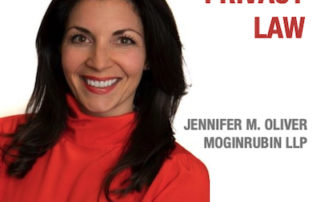
Healthcare Industry Antitrust Measures Advance as Pandemic Pressures Persist Did consolidation help frustrate U.S. COVID-19 preparedness? Clearly antitrust enforcers must consider external circumstances like the COVID-19 crisis when making enforcement decisions, and the agencies have bene able to pivot to respond to this crisis remarkably quickly. It is important, however, to also consider whether and how these emergency COVID-19 collaborations will unwind once the crisis has subsided. Collaborating competitors will have already shared critical information and resources, and that momentum can be difficult to halt. Jennifer M. Oliver, Partner, MoginRubin LLP READ MORE Jennifer M. Oliver Partner MoginRubin LLP
Tech’s Big Four Will Testify Before Antitrust Subcommittee
Four Technology Giants’ CEOs Will Testify Before Congress in On-going Antitrust Investigation Executives from Amazon, Apple, Facebook, and Google will appear (either virtually, as they are permitted to, or in person) before the U.S. House of Representatives’ Judiciary Antitrust Subcommittee on July 27, 2020. According to its press release, the Subcommittee has been scrutinizing the companies’ dominance in their respective digital spheres and the “adequacy of existing antitrust laws and enforcement,” since June 2019. The hearing will enable legislators to question the executives about possible antitrust abuses, which have been the focus of many federal, state, and foreign regulatory inquiries. For example, Representatives may inquire about Amazon’s treatment of third-party merchants who sell products on its e-commerce platform, Google’s highly profitable ad business, Apple’s App Store terms that infringe on the rights of third-party app developers, and Facebook’s leverage of previously acquired companies to solidify its social media dominance, according to a July 1, 2020 New York Times article by David McCabe. The hearing may serve as the crowning piece of the Subcommittee’s antitrust probe. As the Subcommittee’s press release stated, the CEOs’ “forthcoming” testimony is “essential” to completion of the investigation.

Cannabis, CBD: Advertising and Drug Test Problems
COVID-19 vs Cannabis: Are Closures Legal? In the category of “damned if you do; damned if you don’t,” Massachusetts Governor Charlie Baker shut down recreational cannabis shops, citing concerns over the spread of COVID-19. The dispensaries say the shutdown could seriously damage the industry. But, the governor said, the spread of disease will continue to damage the health of his constituents, especially as residents of states where recreational marijuana is illegal, come to Massachusetts to do their cannabis shopping. Citizens of the state may still obtain medical cannabis, as reported by WBUR. Too Much TCH: Can CBD Use Cost You Your Job? A New York truck driver has sued a CBD company for allegedly making a product, which he says he uses for pain relief, with too much THC, more than the label indicates. A Pennsylvania woman filed a similar case and a Missouri school bus monitor had a similar experience. Another Missourian blames the store where he purchased his CBD, saying he was assured the product contained minimal THC. All claim they were told they could pass drug tests. All failed their test. And all lost their jobs, according to a post on the Huffs & Puffs website. "Courtesy of a dearth of strict standards of testing, many companies tend to list lower values of THC on the product label," writes Huffs & Puffs. "The quantities of THC will never be ‘as high to make you high’ but they may be enough for you to fail a drug test, conducted via not the most of the sophisticated equipment out there." "For entrepreneurs in the cannabis niche, this is a topic of huge concern as the number of such lawsuits are only going to increase as people keep failing drug tests after consuming CBD. Not Enough THC: No Golden [...]
The Dark Net: Anonymity, Infrastructure, and the Future
Register Webinar Info Wednesday, Aug. 5, 2020 United States 8am PT | 10am CT | 11am ET United Kingdom 4pm BST Get CLE or CPE, a complete set of materials, and answers to your questions! Email us your: Speaker questions CLE questions Topics Covered Physical and Logical Topology and Method of Data Transmission Using the Dark Net for Threat Hunting Hacking Groups and Malicious Hackers The Future of The Dark Net and Anonymity The Dark Net: Anonymity, Infrastructure, and the Future Is the Dark Web Getting Darker? Wed., Aug. 5, 2020 | Produced for Access Data by HB Litigation Conferences The web, however singular it may seem from behind an everyday user’s computer or smartphone screen, comprises three distinctive parts: the public net (or web), the deep net, and the dark net. Though the dark net contains some innocuous content and is used for legitimate purposes, it also operates as a platform for illegal marketplaces. These offer almost anything a criminal or cybercriminal might want to buy or sell like malware, exploits, hackers-for-hire, information lifted from data breaches, censored content, and goods like drugs, guns, and other contraband. Observers report that the dark web is getting darker, meaning hardcore criminals make up a greater percentage of its user base. Exploits and other hacking tools and techniques used to disrupt business, critical infrastructure, and misappropriate confidential information are continually diversifying and becoming more complex. According to Cyber Defense Magazine, the annual cost of cybercrime damages to users, online businesses, and nations is expected to hit $5 trillion this year, with some estimates ranging as high as $10 trillion. Join two highly experienced data security professionals – Mary T. Frantz of Enterprise Knowledge Partners and Frank Krahn of Burdock Consulting – [...]

Monsanto, Bayer Paying Billions for PCB Cleanups
Read Baltimore Sun environmental writer Scott Dance's June 24, 2020, article titled, "A $550M national class-action settlement includes money for cleanup of PCBs in Baltimore waterways." He offers the Maryland angle on the $550 million class action settlement between Monsanto and 13 government agencies across the U.S., just part of a much larger agreement. "The settlement was one of several that Monsanto’s owner, German pharmaceutical company Bayer, announced Wednesday. Bayer said it’s paying up to $10.9 billion to settle current and potential future litigation over Monsanto’s weedkiller Roundup, which has faced numerous lawsuits over claims it causes cancer, and $1.22 billion to settle two further cases, including the class action focused on PCBs." Dance writes that the terms of this settlement are off to Judge Fernando M. Olquin of the Central District of California for his review. Judge Olquin was one of the presenters on multiple panels at the Class Action Law Forum presented by Western Alliance Bank and produced by my team at HB. Kenneth R. Feinberg, also a presenter, is the court-appointed special master in the case. The Baltimore Sun piece was one of many that gave the local perspective on this nationwide litigation and settlement in progress, like this one from the San Francisco Chronicle, with a Seattle dateline, and this one from the Washington State Wire quoting the state's AG, and this one from the Portland Tribune, with a take on the Oregon impact. And law firms, which stand to gain a great deal in attorney fees issued announcements of their part in the deal, like this one from Baron & Budd. It doesn't appear the leading defense firm, Skadden Arps, issued a separate statement, but joined in the Bayer announcement. It quoted the firm's John Beisner, "a consultant to Bayer’s Supervisory Board and a [...]

Contract Drafting Fundamentals
Register Now Contract Drafting Fundamentals: What I Wish They Taught Me in Law School Speaker: Will Marshall | Partner UBM Law LLP Date: Thursday | July 23, 2020 Time: 2pm ET 1pm CT 12pm MT 11am PT Duration: 75 minutes Price: Early Bird Registration: $75 After July 14: $95 Special: Complimentary with discount code! What you get: CLE credit Course materials Webinar recording Answers to your questions! Contact CLE Manager Get practical insights on contract drafting. For new and seasoned attorneys alike, this 75-minute program will cover core, practical aspects of contract drafting, including a broad range of fundamental concepts, skills, and tips. The program is designed to make you a more deliberate drafter and improve your ability to assess the purpose and effectiveness of each provision in your contract. We will discuss not only what is on the page, but external dynamics that affect drafting and negotiation. Finally, we will reserve time to answer your questions. I am offering this program for free to my network to help you develop these foundational skills. If you haven't received it, please contact me directly for the complimentary pass code. -- Will Marshall, Partner, UBM Law Group LLP Key topics: The goals and challenges of good drafting. The anatomy and building blocks of a contract. Categories of contract language. Typical sources of ambiguity. Tips on everything from file naming conventions to how to draft a nested signature block and what a tipping basket is. Your questions via live chat or by email before or and after the event. Send Will a Question Meet our panelist. Will Marshall | Partner UBM Law Group, LLC Will is a co-founder of UBM Law Group. He [...]

Organizational Values & Coronavirus Business Risks | Join Our Webinar June 18
Webinar: June 18, 2020 2:00 pm ET 60 mins. CLE: 1+ Complimentary with registration. Get: +CLE +Materials +Recording +Answers! Also available to subscribers of the West LegalEdcenter. Register there! Email us your: Speaker questions CLE questions Speaker: Professor Edward L. Queen Ph.D. , J.D. Director Ethics and Servant Leadership: Emory Center for Ethics Emory University Organizational Values & Coronavirus Business Risks Properly Balancing Stakeholder Concerns Thursday, June 18, 2020 | 2pm ET | 1pm CT | 12pm MT | 11am PT The pandemic brings with it complex liability concerns, stakeholder demands and legal duties. We will take a closer look. The current pandemic confronts businesses, nonprofit organizations, governments, and the legal profession with innumerable ethical challenges. Management issues and liability concerns, stakeholder demands and legal duties become even more complex in an environment of uncertainty and one where the consequences could result in serious illness or even death. This program seeks to engage the participants in thinking through these challenges and developing processes of ethical response to them. Managers must acknowledge and address the framework of fear associated with the pandemic, ranging from fear of contagion and death to fears of unemployment, child care, and the duties of home-schooling. Additionally, as the economy reopens there must be serious attention to the processes of doing so, including: We will address: Appropriate accommodation for high-risk employees or employees with family members who are at a heightened risk; Attention to means of mitigating transmission and infection; Contact tracing and management of data collected, including health data, as well as responses to employees who refuse to report; Duty to avoid discrimination and stigmatization; Developing plans to address possibility of re-occurrence in the fall and managing possible outbreaks in company’s offices. [...]
The Intersection of Privacy and Antitrust Webinar Now Available On-Demand on the West LegalEdcenter
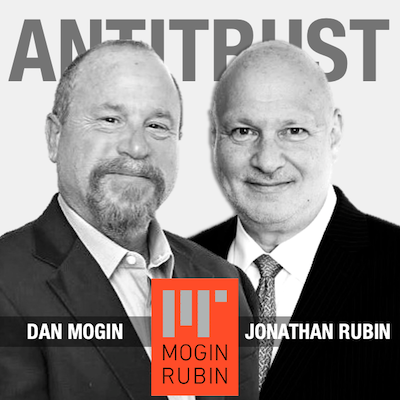
Available as part of your subscription to The Thomson Reuters West LegalEdcenter®. Don't subscribe to the West LegalEdcenter? This webinar is still available directly from HB. Take it now! Questions for speakers Questions@LitigationConferences.com CLE questions CLE@LitigationConferences.com Check out the MoginRubin blog for more insights on antitrust and privacy law. What attorneys and companies need to know about the increasing interplay between these critical areas of the law. Highly publicized cases and investigations in the U.S. and Europe of big technology, e-commerce, and social media companies demonstrate how anti-competition laws are being used to scrutinize and challenge not only how these corporations conduct themselves in the marketplace, but the very core of their colossal success: the mass collection and utilization of user data. Are the privacy and antitrust worlds beginning to cross over? Or do they simply run parallel while addressing entirely different types of conduct? Whatever the answer, data is the raw material that drives the likes of Google, Facebook, Apple and Amazon, so how it is handled is a critical question when counseling clients on mergers and acquisitions. Moderator Daniel J. Mogin | Managing Partner, MoginRubin LLP Speakers Jennifer M. Oliver, CIPP/US | Partner, MoginRubin LLP Thomas N. Dahdouh | Director, Western Region, Federal Trade Commission Franklin M. Rubinstein | Partner, Wilson Sonsini Goodrich & Rosati Randi W. Singer, CIPP/US, CIPT | Partner, Weil, Gotshal & Manges Contributor Dina Srinivasan | Independent Researcher & Author of The Antitrust Case Against Facebook Dina was unable to present but we thank her for her content contributions. Agenda Who should regulate privacy violations in the U.S.? Which antitrust issues implicate privacy concerns? What role does machine learning play on the competitive landscape? What is big data really? How is it different from “data”? What are the elements of effective merger reviews? What are the appropriate [...]

The Intersection of Antitrust & Privacy | A MoginRubin Webinar | 10.31.2019
[two-fifths-first] Recorded: Oct. 31, 2019 Duration: 100 minutes Presented by: MoginRubin LLP Produced by: HB Litigation Conferences The Panel Moderator Daniel J. Mogin | Managing Partner, MoginRubin LLP Speakers Jennifer M. Oliver, CIPP/US | Partner, MoginRubin LLP Thomas N. Dahdouh | Director, Western Region, Federal Trade Commission Franklin M. Rubinstein | Partner, Wilson Sonsini Goodrich & Rosati Randi W. Singer, CIPP/US, CIPT | Partner, Weil, Gotshal & Manges Contributor Dina Srinivasan | Independent Researcher & Author of The Antitrust Case Against Facebook Dina was unable to present but we thank her for her content contributions. What you will get: At least 1 hour of CLE credit. Answers to your questions via email. The opportunity to share with others on your team. The complete Powerpoint. The Antitrust Case Against Facebook Dina Srinivasan's statement to the House Committee on the Judiciary, Subcommittee on Antitrust, Commercial, and Administrative Law The Chicago Booth School Stigler Center Committee on Digital Platforms Final Report Write to us at CLE@LitigationConferences.com to: Ask about CLE Request the materials Send a question for the speakers [/two-fifths-first][three-fifths] Market Behavior and Data-Driven Market Power Highly publicized cases and investigations in the U.S. and Europe of big technology, e-commerce, and social media companies demonstrate how anti-competition laws are being used to scrutinize and challenge not only how these corporations conduct themselves in the marketplace, but the very core of their colossal success: the mass collection and utilization of user data. Are the privacy and antitrust worlds beginning to cross over? Or do they simply run parallel while addressing entirely different types of conduct? Whatever the answer, data is the raw material that drives the likes of Google, Facebook, Apple and Amazon, so how it is handled is a critical question when counseling clients on mergers and acquisitions. Meanwhile, there is increasing [...]
PTSD Claims Brought by Facebook’s ‘Graphic Content’ Reviewers Goes to ADR, Putting Civil Action on Pause
By Tom Hagy Facebook can be great fun. How else would I have seen a video of an eight-year-old drummer-girl utterly thrashing Led Zeppelin’s Good Times Bad Times? Or a dog running away with a lit skyrocket as his human friends run, duck and ditch for their lives? Or what your cat looks like in a tuxedo? Facebook can also be a source of horror. Some of the most distressful commentary and images you wish you could un-see. And that’s just from my family. Imagine your entire job is to monitor Facebook discussions and remove its graphic content. Day in and day out. That’s literally all you did. A group of Facebook employees says that was their job, and their exposure to an “unmitigated barrage of horrifying content” and “toxic images” has caused them to suffer “debilitating trauma-related injuries.” In September 2018 they filed suit in California Superior Court in San Mateo seeking an order requiring Facebook to implement safety guidelines for content moderators which, they say, the company has admitted are “necessary and appropriate.” They also want the company to fund a medical monitoring program for the diagnosis and treatment of psychological injuries including post-traumatic stress disorder, or PTSD. The plaintiffs quote Chris Harrison, whom they characterize as a Facebook executive in charge of the company’s “global resiliency team” as saying “of course” the company should offer content moderators post-employment counseling. The plaintiffs filed the suit as a proposed class action, and relied on state laws including the California Unfair Competition Law alleging Facebook’s conduct was negligent, and negligence forms the basis of a UCL claim. Facebook moved for a judgment on the pleadings, saying the facts are insufficient to constitute a community of interest required for class actions and that there is no ascertainable class. The company [...]
Canna Law Blog Reviews Hemp-CBD Regulations State-by-State, Week-by-Week
“When it comes to hemp, few states have embraced it like Colorado,” writes Harris Bricken attorney Daniel Shortt. “If you buy a product containing hemp, in any state across the country, it likely came from Colorado.” The state has allocated more than 12,000 acres of outdoor space and 2.35 million square feet of indoor space to hemp cultivation, according to Marijuana Business Daily. Shortt and his colleagues are working their way through a state-by-state series on the Canna Law Blog™, titled Hemp-CBD Across State Lines. The Harris Bricken team has covered Alabama, Alaska, Arizona, Arkansas and California, and added Colorado to the list yesterday, July 21. The firm’s series covers state regulatory activity following the enactment of the federal Agriculture Improvement Act of 2018, aka “The Farm Bill,” which removed hemp and its derivatives from the definition of marijuana under the Controlled Substances Act. The bill gave the USDA regulatory authority over hemp cultivation at the federal level, but states may maintain primary regulatory authority over the crop cultivated within their borders by submitting a plan to the USDA, Shortt explains. Read the Canna Law Blog's Colorado post and follow this series, updated weekly. Related Webinar This Week The Harris Bricken law firm has been on the forefront of the law regarding cannabis and related products for years. Three Harris Bricken attorneys, Daniel Shortt, Nathalie Bougenies, and Griffen Thorne -- plus Anastasia Gilmartin, General Counsel at CBD product maker OLEO Inc. -- will discuss how the legal landscape of hemp-derived CBD is affecting various stakeholders. They will: + Discuss both the 2014 and 2018 Farm Bills + Analyze the FDA’s position on products containing hemp and/or CBD (including food, beverages, cosmetics, dietary supplements, drugs, and smokeable products) + Provide an overview of state laws + Share insights on where [...]
Setting the record straight on cyber insurance claim denials and the ‘war exclusion’
Is insurance coverage for cyber claims barred by a war exclusion? Judy Selby and Peter McLaughlin asked this question in a recent post for IAPP. Two corporate giants, Mondelez International and Merck, made the headlines recently as they sustained serious damage as a result of a NotPetya infection, an encrypting ransomware. They have each filed declaratory judgments after their carriers denied their claims. Reports of these insurance disputes have led to concerns that cyber incidents involving state actors would not be covered by cyber policies with war exclusions. The Verizon 2019 Data Breach Investigations Report attributes 23% of breaches to nation-states or state-affiliated players. "These state-sponsored attacks typically range from theft or espionage to financial gain; however, some attacks appear to have been driven by grudge or by swatting a neighbor," Selby and McLaughlin write. "[P]erhaps we are viewing this through an old lens. Insurance has often been purchased to address hazards. Specifically, an organization obtains a policy to counter the slim risk of a fire, flood or other catastrophe. Fred Kaplan wrote an article for Slate in April in which he argues the inevitability of attacks – state-sponsored or otherwise – means that we should view cyber insurance more like we do health insurance: coverage against the inevitable, rather than against a hazard risk." Read on for what else Selby and McLaughlin had to say here.














PTSD in Multi-Plaintiff and Mass Tort Cases | Webinar OnDemand
[one-fourth-first] Price: $47 When: On-demand Where: Your computer or mobile device CLE: 1 hour Speakers Mark I. Levy MD, DLFAPA Medical Director Forensic Psychiatric Associates Medical Corporation Associate Clinical Professor, Psychiatry University of California, San Francisco, School of Medicine 415.388.8040 mlevy@fpamed.com Sarah A. Hall, PhD. Psychologist for Forensic & Neuropsychological Assessments Forensic Psychiatric Associates Medical Corporation shall@fpamed.com [/one-fourth-first][three-fourths] What tort attorneys need to know about PTSD claims. Mass tort claims arise most frequently in man-made and natural disaster catastrophe litigation as well as personal injury, employment, product liability and toxic tort litigation. Frequently, these lawsuits include either primary or secondary allegations of emotional distress. PTSD is one of the most common emotional distress claims alleged within mass tort litigation, as well as allegations of depression and emotional stress (anxiety). Join an experienced psychiatrist and psychologist who will cover the following topics relevant to the forensic psychiatric assessment of emotional damages within mass tort and complex litigation: + Introduction: Defining PTSD. What it is and what it is not. + The methodological approach to assessing allegations of emotional distress in mass tort & complex litigation. + The importance and the methodology of psychological testing as part of the assessment of emotional distress claims in mass tort litigation. + Claimant population screening. Using psychological test instruments to differentiate claimants who require in-depth forensic psychiatric assessment from claimants who do not. + Are all psych tests the same? Types of psychological test instruments we recommend and ones that we do not -- and why. + So-called “PTSD Tests.” Do they have a role in forensic psychological assessments? + Accuracy and reliability of conclusions derived from psychological test data. + Taking a “team approach” to emotional distress claim assessment in mass tort litigation. [/three-fourths]