
HB Partner Webinars on the West LegalEdcenter
Take these CLE webinars on the West LegalEdcenter platform. Each program features leading litigators in their respective fields on emerging subjects. Speakers and topics are handpicked by HB. Your organization may have already subscribed to the platform, but each session is also available for individual purpose. For questions or if you wish to propose a webinar, write to us at: Webinars@LitigationConferences.com.
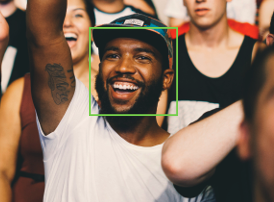
Facial Recognition Update July 2020
Facial Recognition Technology -- Emerging After Decades of Development -- Draws Lawsuits and Proposed Bans We sometimes forget that not all of the technical wizards who transformed our world were young “geniuses” jacked up on Starbucks, their shirttails hanging out in the ping-pong section of their open concept offices. Woody Bledsoe was born 99 years ago. As a young son of a sharecropper he demonstrated exceptional mathematical capabilities. Early in his career he had a dream: A machine that could think like a human, converse like one, and even recognize faces. This was as far back as the 1950s. This mathematician and computer scientist would go on to teach for decades at the University of Austin where he worked to advance automated reasoning and artificial intelligence. But what was his role in the development of the technology exactly? Did he perform work for a CIA front? And why, in his old age and suffering from the cruelty of ALS that would ultimately kill him in 1995, did he ask his son to set fire to a stack of old papers? Take a look at “The Secret History of Facial Recognition” written by Shaun Raviv for Wired Magazine, which explores why, among other things, “the record of [Blesdoe’s] role all but vanished.” If there isn’t a movie script in the works there probably will be soon. Today facial recognition is used in such innocent and handy ways as pointing out your friends in a photograph on Facebook to infinitely more serious and controversial applications as identifying people who may or may not be of interest to law enforcement. We’re in what should be an expected phase with something so disruptive and, let’s face it, lucrative. That’s the phase where lawyers and lawmakers dive in to grapple with how to square the disruption with the laws and norms of society. Facebook has been on the blunt end of this recently, as has the company Clearview AI and even the New [...]

Healthcare Industry Antitrust Measures Advance as Pandemic Pressures Persist
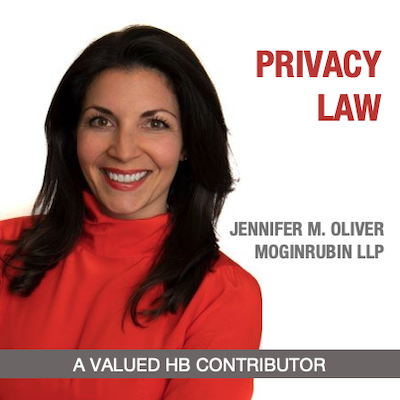
Healthcare Industry Antitrust Measures Advance as Pandemic Pressures Persist Did consolidation help frustrate U.S. COVID-19 preparedness? Clearly antitrust enforcers must consider external circumstances like the COVID-19 crisis when making enforcement decisions, and the agencies have bene able to pivot to respond to this crisis remarkably quickly. It is important, however, to also consider whether and how these emergency COVID-19 collaborations will unwind once the crisis has subsided. Collaborating competitors will have already shared critical information and resources, and that momentum can be difficult to halt. Jennifer M. Oliver, Partner, MoginRubin LLP READ MORE Jennifer M. Oliver Partner MoginRubin LLP
Tech’s Big Four Will Testify Before Antitrust Subcommittee
Four Technology Giants’ CEOs Will Testify Before Congress in On-going Antitrust Investigation Executives from Amazon, Apple, Facebook, and Google will appear (either virtually, as they are permitted to, or in person) before the U.S. House of Representatives’ Judiciary Antitrust Subcommittee on July 27, 2020. According to its press release, the Subcommittee has been scrutinizing the companies’ dominance in their respective digital spheres and the “adequacy of existing antitrust laws and enforcement,” since June 2019. The hearing will enable legislators to question the executives about possible antitrust abuses, which have been the focus of many federal, state, and foreign regulatory inquiries. For example, Representatives may inquire about Amazon’s treatment of third-party merchants who sell products on its e-commerce platform, Google’s highly profitable ad business, Apple’s App Store terms that infringe on the rights of third-party app developers, and Facebook’s leverage of previously acquired companies to solidify its social media dominance, according to a July 1, 2020 New York Times article by David McCabe. The hearing may serve as the crowning piece of the Subcommittee’s antitrust probe. As the Subcommittee’s press release stated, the CEOs’ “forthcoming” testimony is “essential” to completion of the investigation.

Cannabis, CBD: Advertising and Drug Test Problems
COVID-19 vs Cannabis: Are Closures Legal? In the category of “damned if you do; damned if you don’t,” Massachusetts Governor Charlie Baker shut down recreational cannabis shops, citing concerns over the spread of COVID-19. The dispensaries say the shutdown could seriously damage the industry. But, the governor said, the spread of disease will continue to damage the health of his constituents, especially as residents of states where recreational marijuana is illegal, come to Massachusetts to do their cannabis shopping. Citizens of the state may still obtain medical cannabis, as reported by WBUR. Too Much TCH: Can CBD Use Cost You Your Job? A New York truck driver has sued a CBD company for allegedly making a product, which he says he uses for pain relief, with too much THC, more than the label indicates. A Pennsylvania woman filed a similar case and a Missouri school bus monitor had a similar experience. Another Missourian blames the store where he purchased his CBD, saying he was assured the product contained minimal THC. All claim they were told they could pass drug tests. All failed their test. And all lost their jobs, according to a post on the Huffs & Puffs website. "Courtesy of a dearth of strict standards of testing, many companies tend to list lower values of THC on the product label," writes Huffs & Puffs. "The quantities of THC will never be ‘as high to make you high’ but they may be enough for you to fail a drug test, conducted via not the most of the sophisticated equipment out there." "For entrepreneurs in the cannabis niche, this is a topic of huge concern as the number of such lawsuits are only going to increase as people keep failing drug tests after consuming CBD. Not Enough THC: No Golden [...]
The Dark Net: Anonymity, Infrastructure, and the Future
Register Webinar Info Wednesday, Aug. 5, 2020 United States 8am PT | 10am CT | 11am ET United Kingdom 4pm BST Get CLE or CPE, a complete set of materials, and answers to your questions! Email us your: Speaker questions CLE questions Topics Covered Physical and Logical Topology and Method of Data Transmission Using the Dark Net for Threat Hunting Hacking Groups and Malicious Hackers The Future of The Dark Net and Anonymity The Dark Net: Anonymity, Infrastructure, and the Future Is the Dark Web Getting Darker? Wed., Aug. 5, 2020 | Produced for Access Data by HB Litigation Conferences The web, however singular it may seem from behind an everyday user’s computer or smartphone screen, comprises three distinctive parts: the public net (or web), the deep net, and the dark net. Though the dark net contains some innocuous content and is used for legitimate purposes, it also operates as a platform for illegal marketplaces. These offer almost anything a criminal or cybercriminal might want to buy or sell like malware, exploits, hackers-for-hire, information lifted from data breaches, censored content, and goods like drugs, guns, and other contraband. Observers report that the dark web is getting darker, meaning hardcore criminals make up a greater percentage of its user base. Exploits and other hacking tools and techniques used to disrupt business, critical infrastructure, and misappropriate confidential information are continually diversifying and becoming more complex. According to Cyber Defense Magazine, the annual cost of cybercrime damages to users, online businesses, and nations is expected to hit $5 trillion this year, with some estimates ranging as high as $10 trillion. Join two highly experienced data security professionals – Mary T. Frantz of Enterprise Knowledge Partners and Frank Krahn of Burdock Consulting – [...]
Monsanto, Bayer Paying Billions for PCB Cleanups
Read Baltimore Sun environmental writer Scott Dance's June 24, 2020, article titled, "A $550M national class-action settlement includes money for cleanup of PCBs in Baltimore waterways." He offers the Maryland angle on the $550 million class action settlement between Monsanto and 13 government agencies across the U.S., just part of a much larger agreement. "The settlement was one of several that Monsanto’s owner, German pharmaceutical company Bayer, announced Wednesday. Bayer said it’s paying up to $10.9 billion to settle current and potential future litigation over Monsanto’s weedkiller Roundup, which has faced numerous lawsuits over claims it causes cancer, and $1.22 billion to settle two further cases, including the class action focused on PCBs." Dance writes that the terms of this settlement are off to Judge Fernando M. Olquin of the Central District of California for his review. Judge Olquin was one of the presenters on multiple panels at the Class Action Law Forum presented by Western Alliance Bank and produced by my team at HB. Kenneth R. Feinberg, also a presenter, is the court-appointed special master in the case. The Baltimore Sun piece was one of many that gave the local perspective on this nationwide litigation and settlement in progress, like this one from the San Francisco Chronicle, with a Seattle dateline, and this one from the Washington State Wire quoting the state's AG, and this one from the Portland Tribune, with a take on the Oregon impact. And law firms, which stand to gain a great deal in attorney fees issued announcements of their part in the deal, like this one from Baron & Budd. It doesn't appear the leading defense firm, Skadden Arps, issued a separate statement, but joined in the Bayer announcement. It quoted the firm's John Beisner, "a consultant to Bayer’s Supervisory Board and a [...]

Contract Drafting Fundamentals
Register Now Contract Drafting Fundamentals: What I Wish They Taught Me in Law School Speaker: Will Marshall | Partner UBM Law LLP Date: Thursday | July 23, 2020 Time: 2pm ET 1pm CT 12pm MT 11am PT Duration: 75 minutes Price: Early Bird Registration: $75 After July 14: $95 Special: Complimentary with discount code! What you get: CLE credit Course materials Webinar recording Answers to your questions! Contact CLE Manager Get practical insights on contract drafting. For new and seasoned attorneys alike, this 75-minute program will cover core, practical aspects of contract drafting, including a broad range of fundamental concepts, skills, and tips. The program is designed to make you a more deliberate drafter and improve your ability to assess the purpose and effectiveness of each provision in your contract. We will discuss not only what is on the page, but external dynamics that affect drafting and negotiation. Finally, we will reserve time to answer your questions. I am offering this program for free to my network to help you develop these foundational skills. If you haven't received it, please contact me directly for the complimentary pass code. -- Will Marshall, Partner, UBM Law Group LLP Key topics: The goals and challenges of good drafting. The anatomy and building blocks of a contract. Categories of contract language. Typical sources of ambiguity. Tips on everything from file naming conventions to how to draft a nested signature block and what a tipping basket is. Your questions via live chat or by email before or and after the event. Send Will a Question Meet our panelist. Will Marshall | Partner UBM Law Group, LLC Will is a co-founder of UBM Law Group. He [...]

Organizational Values & Coronavirus Business Risks | Join Our Webinar June 18
Webinar: June 18, 2020 2:00 pm ET 60 mins. CLE: 1+ Complimentary with registration. Get: +CLE +Materials +Recording +Answers! Also available to subscribers of the West LegalEdcenter. Register there! Email us your: Speaker questions CLE questions Speaker: Professor Edward L. Queen Ph.D. , J.D. Director Ethics and Servant Leadership: Emory Center for Ethics Emory University Organizational Values & Coronavirus Business Risks Properly Balancing Stakeholder Concerns Thursday, June 18, 2020 | 2pm ET | 1pm CT | 12pm MT | 11am PT The pandemic brings with it complex liability concerns, stakeholder demands and legal duties. We will take a closer look. The current pandemic confronts businesses, nonprofit organizations, governments, and the legal profession with innumerable ethical challenges. Management issues and liability concerns, stakeholder demands and legal duties become even more complex in an environment of uncertainty and one where the consequences could result in serious illness or even death. This program seeks to engage the participants in thinking through these challenges and developing processes of ethical response to them. Managers must acknowledge and address the framework of fear associated with the pandemic, ranging from fear of contagion and death to fears of unemployment, child care, and the duties of home-schooling. Additionally, as the economy reopens there must be serious attention to the processes of doing so, including: We will address: Appropriate accommodation for high-risk employees or employees with family members who are at a heightened risk; Attention to means of mitigating transmission and infection; Contact tracing and management of data collected, including health data, as well as responses to employees who refuse to report; Duty to avoid discrimination and stigmatization; Developing plans to address possibility of re-occurrence in the fall and managing possible outbreaks in company’s offices. [...]
The Intersection of Privacy and Antitrust Webinar Now Available On-Demand on the West LegalEdcenter
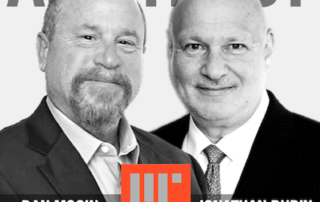
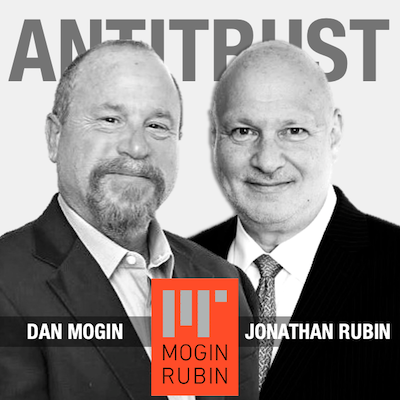
Available as part of your subscription to The Thomson Reuters West LegalEdcenter®. Don't subscribe to the West LegalEdcenter? This webinar is still available directly from HB. Take it now! Questions for speakers Questions@LitigationConferences.com CLE questions CLE@LitigationConferences.com Check out the MoginRubin blog for more insights on antitrust and privacy law. What attorneys and companies need to know about the increasing interplay between these critical areas of the law. Highly publicized cases and investigations in the U.S. and Europe of big technology, e-commerce, and social media companies demonstrate how anti-competition laws are being used to scrutinize and challenge not only how these corporations conduct themselves in the marketplace, but the very core of their colossal success: the mass collection and utilization of user data. Are the privacy and antitrust worlds beginning to cross over? Or do they simply run parallel while addressing entirely different types of conduct? Whatever the answer, data is the raw material that drives the likes of Google, Facebook, Apple and Amazon, so how it is handled is a critical question when counseling clients on mergers and acquisitions. Moderator Daniel J. Mogin | Managing Partner, MoginRubin LLP Speakers Jennifer M. Oliver, CIPP/US | Partner, MoginRubin LLP Thomas N. Dahdouh | Director, Western Region, Federal Trade Commission Franklin M. Rubinstein | Partner, Wilson Sonsini Goodrich & Rosati Randi W. Singer, CIPP/US, CIPT | Partner, Weil, Gotshal & Manges Contributor Dina Srinivasan | Independent Researcher & Author of The Antitrust Case Against Facebook Dina was unable to present but we thank her for her content contributions. Agenda Who should regulate privacy violations in the U.S.? Which antitrust issues implicate privacy concerns? What role does machine learning play on the competitive landscape? What is big data really? How is it different from “data”? What are the elements of effective merger reviews? What are the appropriate [...]
The Intersection of Antitrust & Privacy | A MoginRubin Webinar | 10.31.2019
[two-fifths-first] Recorded: Oct. 31, 2019 Duration: 100 minutes Presented by: MoginRubin LLP Produced by: HB Litigation Conferences The Panel Moderator Daniel J. Mogin | Managing Partner, MoginRubin LLP Speakers Jennifer M. Oliver, CIPP/US | Partner, MoginRubin LLP Thomas N. Dahdouh | Director, Western Region, Federal Trade Commission Franklin M. Rubinstein | Partner, Wilson Sonsini Goodrich & Rosati Randi W. Singer, CIPP/US, CIPT | Partner, Weil, Gotshal & Manges Contributor Dina Srinivasan | Independent Researcher & Author of The Antitrust Case Against Facebook Dina was unable to present but we thank her for her content contributions. What you will get: At least 1 hour of CLE credit. Answers to your questions via email. The opportunity to share with others on your team. The complete Powerpoint. The Antitrust Case Against Facebook Dina Srinivasan's statement to the House Committee on the Judiciary, Subcommittee on Antitrust, Commercial, and Administrative Law The Chicago Booth School Stigler Center Committee on Digital Platforms Final Report Write to us at CLE@LitigationConferences.com to: Ask about CLE Request the materials Send a question for the speakers [/two-fifths-first][three-fifths] Market Behavior and Data-Driven Market Power Highly publicized cases and investigations in the U.S. and Europe of big technology, e-commerce, and social media companies demonstrate how anti-competition laws are being used to scrutinize and challenge not only how these corporations conduct themselves in the marketplace, but the very core of their colossal success: the mass collection and utilization of user data. Are the privacy and antitrust worlds beginning to cross over? Or do they simply run parallel while addressing entirely different types of conduct? Whatever the answer, data is the raw material that drives the likes of Google, Facebook, Apple and Amazon, so how it is handled is a critical question when counseling clients on mergers and acquisitions. Meanwhile, there is increasing [...]
PTSD Claims Brought by Facebook’s ‘Graphic Content’ Reviewers Goes to ADR, Putting Civil Action on Pause
By Tom Hagy Facebook can be great fun. How else would I have seen a video of an eight-year-old drummer-girl utterly thrashing Led Zeppelin’s Good Times Bad Times? Or a dog running away with a lit skyrocket as his human friends run, duck and ditch for their lives? Or what your cat looks like in a tuxedo? Facebook can also be a source of horror. Some of the most distressful commentary and images you wish you could un-see. And that’s just from my family. Imagine your entire job is to monitor Facebook discussions and remove its graphic content. Day in and day out. That’s literally all you did. A group of Facebook employees says that was their job, and their exposure to an “unmitigated barrage of horrifying content” and “toxic images” has caused them to suffer “debilitating trauma-related injuries.” In September 2018 they filed suit in California Superior Court in San Mateo seeking an order requiring Facebook to implement safety guidelines for content moderators which, they say, the company has admitted are “necessary and appropriate.” They also want the company to fund a medical monitoring program for the diagnosis and treatment of psychological injuries including post-traumatic stress disorder, or PTSD. The plaintiffs quote Chris Harrison, whom they characterize as a Facebook executive in charge of the company’s “global resiliency team” as saying “of course” the company should offer content moderators post-employment counseling. The plaintiffs filed the suit as a proposed class action, and relied on state laws including the California Unfair Competition Law alleging Facebook’s conduct was negligent, and negligence forms the basis of a UCL claim. Facebook moved for a judgment on the pleadings, saying the facts are insufficient to constitute a community of interest required for class actions and that there is no ascertainable class. The company [...]
Canna Law Blog Reviews Hemp-CBD Regulations State-by-State, Week-by-Week
“When it comes to hemp, few states have embraced it like Colorado,” writes Harris Bricken attorney Daniel Shortt. “If you buy a product containing hemp, in any state across the country, it likely came from Colorado.” The state has allocated more than 12,000 acres of outdoor space and 2.35 million square feet of indoor space to hemp cultivation, according to Marijuana Business Daily. Shortt and his colleagues are working their way through a state-by-state series on the Canna Law Blog™, titled Hemp-CBD Across State Lines. The Harris Bricken team has covered Alabama, Alaska, Arizona, Arkansas and California, and added Colorado to the list yesterday, July 21. The firm’s series covers state regulatory activity following the enactment of the federal Agriculture Improvement Act of 2018, aka “The Farm Bill,” which removed hemp and its derivatives from the definition of marijuana under the Controlled Substances Act. The bill gave the USDA regulatory authority over hemp cultivation at the federal level, but states may maintain primary regulatory authority over the crop cultivated within their borders by submitting a plan to the USDA, Shortt explains. Read the Canna Law Blog's Colorado post and follow this series, updated weekly. Related Webinar This Week The Harris Bricken law firm has been on the forefront of the law regarding cannabis and related products for years. Three Harris Bricken attorneys, Daniel Shortt, Nathalie Bougenies, and Griffen Thorne -- plus Anastasia Gilmartin, General Counsel at CBD product maker OLEO Inc. -- will discuss how the legal landscape of hemp-derived CBD is affecting various stakeholders. They will: + Discuss both the 2014 and 2018 Farm Bills + Analyze the FDA’s position on products containing hemp and/or CBD (including food, beverages, cosmetics, dietary supplements, drugs, and smokeable products) + Provide an overview of state laws + Share insights on where [...]
Setting the record straight on cyber insurance claim denials and the ‘war exclusion’
Is insurance coverage for cyber claims barred by a war exclusion? Judy Selby and Peter McLaughlin asked this question in a recent post for IAPP. Two corporate giants, Mondelez International and Merck, made the headlines recently as they sustained serious damage as a result of a NotPetya infection, an encrypting ransomware. They have each filed declaratory judgments after their carriers denied their claims. Reports of these insurance disputes have led to concerns that cyber incidents involving state actors would not be covered by cyber policies with war exclusions. The Verizon 2019 Data Breach Investigations Report attributes 23% of breaches to nation-states or state-affiliated players. "These state-sponsored attacks typically range from theft or espionage to financial gain; however, some attacks appear to have been driven by grudge or by swatting a neighbor," Selby and McLaughlin write. "[P]erhaps we are viewing this through an old lens. Insurance has often been purchased to address hazards. Specifically, an organization obtains a policy to counter the slim risk of a fire, flood or other catastrophe. Fred Kaplan wrote an article for Slate in April in which he argues the inevitability of attacks – state-sponsored or otherwise – means that we should view cyber insurance more like we do health insurance: coverage against the inevitable, rather than against a hazard risk." Read on for what else Selby and McLaughlin had to say here.




PTSD in Multi-Plaintiff and Mass Tort Cases | Webinar OnDemand
[one-fourth-first] Price: $47 When: On-demand Where: Your computer or mobile device CLE: 1 hour Speakers Mark I. Levy MD, DLFAPA Medical Director Forensic Psychiatric Associates Medical Corporation Associate Clinical Professor, Psychiatry University of California, San Francisco, School of Medicine 415.388.8040 mlevy@fpamed.com Sarah A. Hall, PhD. Psychologist for Forensic & Neuropsychological Assessments Forensic Psychiatric Associates Medical Corporation shall@fpamed.com [/one-fourth-first][three-fourths] What tort attorneys need to know about PTSD claims. Mass tort claims arise most frequently in man-made and natural disaster catastrophe litigation as well as personal injury, employment, product liability and toxic tort litigation. Frequently, these lawsuits include either primary or secondary allegations of emotional distress. PTSD is one of the most common emotional distress claims alleged within mass tort litigation, as well as allegations of depression and emotional stress (anxiety). Join an experienced psychiatrist and psychologist who will cover the following topics relevant to the forensic psychiatric assessment of emotional damages within mass tort and complex litigation: + Introduction: Defining PTSD. What it is and what it is not. + The methodological approach to assessing allegations of emotional distress in mass tort & complex litigation. + The importance and the methodology of psychological testing as part of the assessment of emotional distress claims in mass tort litigation. + Claimant population screening. Using psychological test instruments to differentiate claimants who require in-depth forensic psychiatric assessment from claimants who do not. + Are all psych tests the same? Types of psychological test instruments we recommend and ones that we do not -- and why. + So-called “PTSD Tests.” Do they have a role in forensic psychological assessments? + Accuracy and reliability of conclusions derived from psychological test data. + Taking a “team approach” to emotional distress claim assessment in mass tort litigation. [/three-fourths]
Cyber Captive Survey 2019 — AON
Aon’s Cyber Captive Survey 2019 says that the rapid growth in the captive market of cyber-specific policies underscores that cyber is one of the primary risks for organizations across the world driven by an increasingly complex operational, technological and regulatory environment. Key findings include: Healthcare and energy industries are leading the way, with 19% and 15% of organizations in these industries utilizing captives for cyber coverage respectively. 41% of captives surveyed are incubating cyber risk. The range in limits of cover taken out is up to USD$100 million. An estimated 34% of all captives will be writing cyber in five years’ time. Read the complete report here!
Nevada to try limited banking for cash-heavy pot industry — ElkoDaily.com
Most marijuana dispensaries are forced to handle massive amounts of cash. Business owners are paying their employees with envelopes full of dollar bills, and bringing duffle bags full of money to government buildings to pay their taxes. That could all change with the new Nevada state law that allows dispensaries to offer a cashless option. This program will be tested for three years before being considered as a permanent feature. State Treasurer Zach Conine likened the system to gift cards or digital apps such as Venmo and said the program would not include broader banking services like loans. Since marijuana is still not legal federally, states are on their own with coming up with a cashless option. Hawaii took similar steps and included a debit payment app, which has spread to other states as well. California lawmakers are also devising a cashless system by creating a class of banks specifically for the industry. This temporary law is set to take place by July 1, 2020 with the hopes of easing transactions and lessen cash handling for customers and businesses Read the complete post by Michelle L. Price on ElkoDaily.com here!
First Class Action Lawsuit Filed on Behalf of Victims of First American Title Company Data Breach — Yahoo!
"Gibbs Law Group LLP has filed the first nationwide class action lawsuit accusing First American Title Company of failing to properly secure 885 million sensitive customer files, instead choosing to store them in a 'woefully insecure,'” publicly-accessible system. “First American has turned the American dream of home ownership into a financial security nightmare for its customers,” according to the complaint. Specifically, the lawsuit alleges that First American Title Company was negligent, and violated its contracts with customers, in the way it stored their personal information, which included bank account numbers, Social Security numbers, financial and tax records, and photos of their drivers’ licenses. "This grave lapse in security resulted in publicly exposing hundreds of millions of customers’ personal files, leaving them vulnerable to identify theft and other cybercrimes," the plaintiffs maintain. Read the complete Press Release on Yahoo! here
Wells Fargo Proposes to Settle Auto Insurance Case for $386M — Yahoo!
In 2017 customers of Wells Fargo & Company (WFC) filed a class action lawsuit alleging the bank forced unwanted auto insurance without permission from the customers. Currently WFC plans to pay around $386 million to settle the 2017 class action lawsuit. The high payout is due to the sheer number of customers affected. About 270,000 WFC customers were "pushed into delinquency " and "almost 25,000 wrongful vehicle repossessions." In addition to the class action settlement, WFC will be reaching out to individual customers offering financial service recovery, and restructuring their leadership teams. WFC is still seeing a decrease in sales and their numbers. In six months WFC shares "lost 4.5% against 6.5% growth recorded by the industry." Read the complete post on Yahoo! here.
The Future of Cyber Operations and the Government
In the forthcoming National Defense Authorization Act the House Armed Services Committee -- specifically the Subcommittee on Intelligence and Emerging Threat Capabilities -- seeks to amend the annual legislation to ensure that Congress is informed when the executive branch executes offensive or defensive cyber operations. The bill defines offensive or defensive cyber operations as a “sensitive military operation.” The goal of this shared information is additional oversight, especially given the newness of cyber tactics. As reported by journalist Derek B. Johnson of FWC.com, two covert cyber operations have taken place since POTUS announced the new policy. The first was in October 2018, a cyber operation with a goal of informing Russian operatives not to meddle with the midterm election. The second took place the following November in which the U.S. Cyber Command blocked access to Russian Internet Research Agency post election. While these two operations have been called “mild” in some critiques, former White House Director of Cyber Infrastructure Protection under President George W. Bush, Jason Healey, believes this highly specialized tactic is ideal since it presents the least potential for collateral damage. While Healey warns against grand and overt attacks, he states that sometimes "conflict is straightforward and you just have to stop adversaries from punching you in the mouth.” Read the complete post by Derek B. Johnson on FCW.com here.
The New York Privacy Act Would Allow Direct Action
The New York Privacy Act, introduced last month by state Sen. Kevin Thomas, advocates for consumer agency over their personal data and would give New Yorkers the right to sue companies directly for privacy violations. Thomas wants companies to put customer data protection ahead of their budgetary and business goals. The bill summary reads: "Enacts the NY privacy act to require companies to disclose their methods of de-identifying personal information, to place special safeguards around data sharing and to allow consumers to obtain the names of all entities with whom their information is shared; creates a special account to fund a new office of privacy and data protection." "Fiduciaries, like an attorney or a doctor, hold onto your information. They don't share it, unless there is a need for the purpose for which they collected it,” Thomas said. “That's not what's going on here with these data companies and these data brokers. They're sharing it, and we're getting targeted.” Pushback from the tech industry has been swift. John Olsen, Director of the Internet Association, said, “The NY Privacy Act, in its current form, is unworkable for businesses that want to comply and fails to provide New York residents meaningful control over how their data is collected, used, and protected." Facebook also chimed in saying they would have to shut down Facebook access to New York users if the bill becomes law. Read the NY Senate Bill S5642.
CannaLawBlog — Legalizing Cannabis Cash
On May 20, 2019 banking associations from all 50 states and 1 territory sent a letter to Senate Banking, Housing, and Urban Affairs Committee urging them to conduct hearings on the merits of providing cannabis-related business access to banking services. CannaLawBlog highlighted the primary concerns of the letter in a recent post: "Again, the primary concern expressed was that current law forces state-legal businesses to operate on a cash basis, which poses a safety risk, complicates enforcement efforts, and could damage local economies." The banking associations wanted to emphasize their neutrality on the legality of cannabis, rather they wanted to show strength as a national community and validate, support, and respect those communities that have voted for legalized recreational marijuana. Read the complete post by HarrisBricken attorney Jihee Ahn on The CannaLawBlog.
CNN — Jury returns $2 billion verdict against Monsanto for couple with cancer — the biggest so far
[one-half-first] [/one-half-first] [one-half] A California jury returned a $2.055 billion verdict against Monsanto and their popular weed killer, Roundup. “The verdict in Oakland includes more than $55 million in compensatory damage and $2 billion in punitive damages.” The septuagenarian plaintiffs, represented by attorney Michael Miller of The Miller Firm, were a California couple that said long-term exposure to Roundup caused both of them to be diagnosed with non-Hodgkin lymphoma, a cancer that usually cannot be traced back to a source according to the American Cancer Society. The particular carcinogen in Roundup is glyphosate, which the EPA has stated was not a carcinogen in a 2015 assessment, which contradicts WHO’s statement that glyphosate is “probably carcinogenic to humans”. While a Monsanto spokesperson previously denied any manipulation, a jury found that a series of texts and emails between Monsanto and the EPA that proved Monsanto culpable of manipulating science. [/one-half] Read the complete post by Michael Nedelman on CNN.com here!
Dr. Babyl: Artificial Intelligence Could Save Lives, Time and Money — TheDailyBeast.com
Itchy throat? Headache? Upset stomach? There's an app for that. There is a new AI healthcare system called Babylon UK’s National Health Service which features an AI-driven app that is reportedly able to separate “run-of-the-mill” illnesses from more life-threatening ones, while saving time, money, and anxiety for patients and doctors alike. Babylon offers more than diagnostic assistance; it is accessible to people in remote areas. "For example, Babyl, the Rwandan version of Babylon, offers remote appointments with clinicians, fills prescriptions, orders lab tests, and issues referrals.” Babyl enables affordable, personalized healthcare, combined with “the brains of thousands of doctors at once” to reach patients who cannot get to a doctor’s officer. In addition to assisting doctors with everyday check-ups and treating the common cold, the AI’s abilities extend to clinical trials. “In 2018 the Mayo Clinic partnered with IBM’s Watson to match patients with breast cancer to accessible clinical trials covered by their health plans. The matching program increased the enrollment of breast cancer sufferers in Mayo Clinic’s own clinical trials by 80%." Questions are being raised, however, about how to mitigate risks posed by hacking or by nefarious manipulation of the system. Read about this and more in the complete post by Joelle Renstrom on TheDailyBeast.com.
The Wrong-Headedness of Hindsight Standards — Michelle Yeary | Drug & Device Law Blog
Dechert LLP attorney Michelle Yeary cautions against applying perfect hindsight to drug liability. "We all know hindsight is 20/20. And, it’s easy. There are dozens of television and radio programs that thrive on Monday morning quarterbacking. There’s no risk in saying the coach should have called for a pass when you already know the run didn’t work. It’s also dangerous because it’s easy. People are often too quick to point out that you should have taken path B after everyone learns path A is full of potholes. Pointing it out is one thing, holding you liable for it is another." Yeary takes a look at what happened in Holley v. Gilead Science, Inc., 2019 WL 2077845 (N.D. Cal. May 10, 2019). The case involves two of the main active ingredients in AIDS drugs: TDF and TAF. The plaintiff alleges that the defendant should be responsible for allegedly knowingly using TDF over TAF (allegedly a safer alternative). TDF was FDA approved first and TAF second. Unfortunately, Yeary wrote, hindsight "can be used to demand perfection," allowing plaintiffs to "proceed on what is essentially a stop-selling theory," that first-generation drugs should not be submitted to the FDA because, in hindsight, "later approved treatments were safer." That's what happened in Holley, she said. Read the complete post by Michelle Yeary on the Drug and Device Law Blog here. Read the opinion here.
J&J Hit with $120 Million Verdict at Mesh Trial
A Philadelphia jury returned a $120 million verdict against Johnson & Johnson after finding that a negligently designed pelvic mesh implant caused chronic pain and suffering, which left plaintiff Susan McFarland incontinent and unable to have sex for the last 10 years. McFarland alleged the implant she received in 2008 caused the product to saw through the soft tissue in her pelvis and become exposed in her vagina. She had to undergo a second surgery to remove a portion of the implant (Susan McFarland,et al. v. Ethicon Inc., et al., No. 130701577, Phila. Comm. Pls. Ct.). This is the second of two trials. The jury in the first trial was deadlocked, unable to agree on the extent of negligence of the design of the Ethicon product. Tracie Palmer, McFarland’s attorney, added in the second trial that the vaginal mesh was on market prior to clinical studies determining its safety and efficacy. Defense attorney Adam Spicer maintained that the chronic pain McFarland experienced could be due to other causes, including her age. He said the product had been used for years prior. McFarland’s case is one of more than 100,000 cases brought together in the MDL, down from nearly 105,000 cases against seven manufacturers. The MDL will be closing and there will be two more waves of trial, with next wave comprising 150 cases. Final settlement conferences are scheduled for August 1 with trial set to begin August 14. McFarland and her husband are represented by Tracie Palmer, Braden Lepisto, Shanin Specter and Lee Balefsky of Kline & Specter PC. Ethicon is represented by Kate Skagerberg of Beck Redden LLP, Adam Spicer, Paul Rosenblatt and Jordan Walker of Butler Snow LLP, and D. Alicia Hickok, Kenneth Murphy and Melissa Merk of Drinker Biddle & Reath LLP.