





Emerging Litigation Podcast

President Biden’s Critical Infrastructure Cyber Memo and CrowdStrike’s Whoopsie Daisy with Elizabeth Burgin Waller
In this episode, we discuss our nation's critical infrastructure in the context of cybersecurity, addressing President Biden's recent National Security Memorandum on Critical Infrastructure Security and Resilience and its implications for sectors like energy, water, and transportation, with guest Elizabeth Burgin Waller of WoodsRogers. Beth also comments on a recent global system glitch that underscores the vulnerability of the networks behind many of our most critical services. We're talking CrowdStrike and Microsoft Windows.

Trademarks, Copyrights, Brands, T-Shirts, and Champagne with Tiffany Gehrke and Kelley Gordon
In this episode, we discuss three matters relevant to anyone watching copyright and trademark law, or anyone fond of branded t-shirts and fancy French beverages, with guests Tiffany Gehrke and Kelley Gordon, both Partners at Marshall, Gerstein & Borun LLP. Listen and learn more! Tom even (somewhat) learned how to say something in French. Mon dieu, people!

Algorithmic Software Facilitated Price Fixing with Jonathan Rubin
Everyone knows that price fixing is against the law, chiefly Section 1 of the federal Sherman Antitrust Act of 1890. Competitors may not collude to set prices. However, there are relatively new price-calculation tools that some companies maintain take them out of the equation. With these tools, shared across an industry, firms do not have to directly swap private information with competitors. Instead, they feed their data to a third-party which uses algorithms to come up with prices. In this episode, we discuss what algorithmic or software-facilitated pricing is, what the law says about price collusion, how this new pricing mechanism violates the law, and recent developments in litigation. Our guest highly regarded antitrust attorney Jonathan Rubin, Partner and Co-Founder of MoginRubin LLP.
A Shameless Plug for Our Content Services
Your content marketing is everything you’ve ever dreamed of. Right?
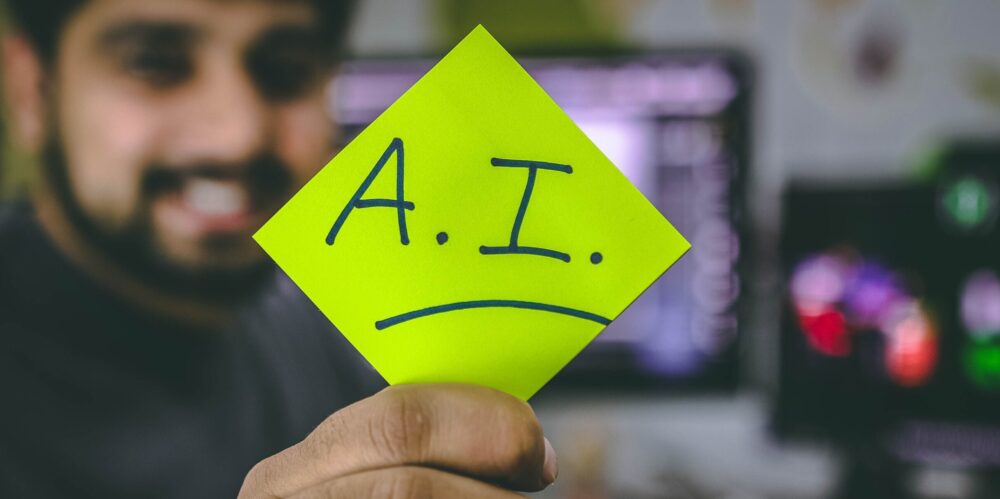
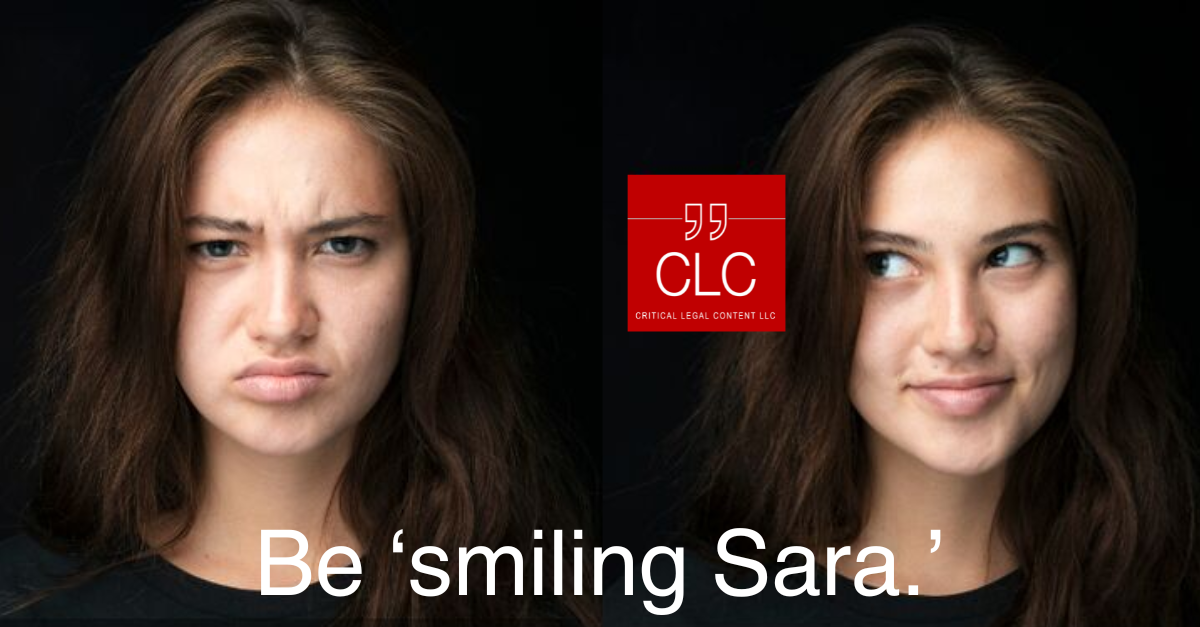 Sara is marketing director at a boutique law firm. When we asked her how their blog was going, she made a sad face. But then, we made Sara smile.*
Critical Legal Content was founded by Tom Hagy, former Editor & Publisher of Mealey’s Litigation Reports and VP at LexisNexis, founder of HB, current litigation podcaster and editor-in-chief. CLC’s mission is to help smaller firms and service providers not only create content — blogs, articles, papers, webinars, podcasts (like the stuff on this site) — but also to get it out there. How? Via social media, this website, your website, and potential via our podcast and journal which we publish in collaboration with vLex Fastcase and Law Street Media. The goal is to attract readers and dizzy them with your brilliance.
*Inspired by actual events.
Create content like a real legal publisher.
Emerging Litigation Journal

From Socks to Strategy: What Zoom Focus Groups Reveal About Your Case with Elizabeth Larrick
Trial attorney and litigation consultant Elizabeth Larrick shares what more than 1,000 virtual focus groups have taught her about trial prep, from testing case narratives to refining jury selection. In this episode of the Emerging Litigation Podcast, discover how Zoom-based sessions reveal surprising insights into witness credibility, evidence presentation, and what really resonates with jurors—yes, even their take on orange socks.


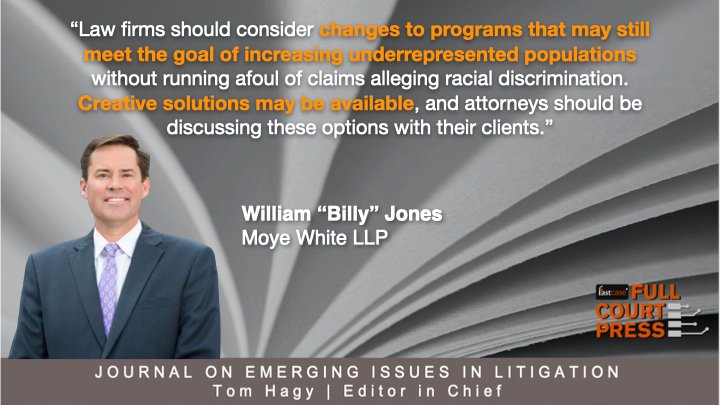
DEI Programs as a Source of Liability for Law Firms and Other Businesses
Two recent cases against international law firms point to an emerging trend in litigation that could have wide-spread implications for diversity, equity, and inclusion (DEI) programs. The author, William "Billy" Jones examines these recent cases filed against the law firms for their DEI fellowships and the potential impacts for law firms and other private businesses.

Judge finds flaws in motion for an injunction against Trump’s wind turbine order
While Trump’s freeze on offshore wind permits faces legal challenge, a federal judge isn’t convinced the states bringing the case have shown enough harm. In this article, guest contributor Justin Ward explains why the motion for an injunction was denied, what it means for the broader battle over renewable energy, and how executive power could stall green infrastructure without ever breaking the law.
HB Webinars on CeriFi LegalEdge


AI Nuts & Bolts Survival Guide: Artificial Intelligence – Discrimination in Employment Context
On this CLE webinar, Duane Morris LLP Attorneys Alex W. Karasik, Gerald L. Maatman, Jr., and George J. Schaller discuss two novel artificial intelligence lawsuits, recent governmental guidance related to AI use, the business risks associated with AI, and mitigation strategies.

AI Image Generators and Copyright: Eligibility in the U.S., UK, EU, and More; Fair Use, Derivative Works, Liability
AI Image Generators and Copyright: Eligibility in the U.S., UK, EU, and More; Fair Use, Derivative Works, Liability AI programs are now readily available for all. Stability AI, Lensa, and other AI image creation tools create original works of art, raising the question of IP protection for such art. The United States requires human authorship in order to obtain copyright protection, and so far, the U.S. Copyright Office has declined to grant copyright registrations for AI-created works of art based on a lack of human authorship (one of these decisions is being challenged in Thaler v. Perlmutter (D.D.C. filed June 2, 2022)). While some countries take a similar approach to the US, others treat the issue of copyright eligibility for AI-generated art quite differently and provide at least some protection of computer generated works. Questions have also been raised as to whether AI-generated images constitute derivative works and whether such images and the AI generation tools used to create them infringe third-party copyrights, or whether the fair use doctrine or other defenses may apply. The first lawsuits involving image generators have now been filed raising copyright claims in addition to other claims. Listen as our authoritative panel of IP attorneys examines AI image generators and the associated copyright issues. The panel will discuss eligibility in the U.S. and the recent actions by the Copyright Office and contrast this with the approaches used in other countries. The panel will also address the recent cases that have been filed and the potential liability for copyright infringement in the U.S. and other countries. Michael R. Graif Member Mintz Levin Cohn Ferris Glovsky and Popeo Lisa T. Oratz Senior Counsel Perkins Coie Scott J. Sholder Partner Cowan DeBaets Abrahams & Sheppard CLE On-Demand Webinar This Strafford production has been specially selected for HB audiences. What hurdles confront counsel when demonstrating authorship of AI-generated works? How does [...]










Class Certification Evidence: Standards of Admissibility and Probative Value Among the Circuits
Class Certification Evidence What Are the Standards of Admissibility and Probative Value Among the Circuits? Numerous splits exist among the circuits on two key certification issues: What is required to prove the elements for class certification and whether plaintiff's certification evidence must be admissible. Further, courts apply different admissibility standards to fact evidence than to expert evidence. Certain courts have issued clear guidance on these important issues, while others have remained circumspect, sending mixed signals. This is particularly vexing for defendants, who may be sued in more than one district or circuit. What is sufficient for class certification in one jurisdiction may be inadequate in another. With standards unsettled, counsel must anticipate and preserve the right to revisit class certification by preserving all objections and the factual record. Listen as the panel of class action attorneys discusses the standards of admissibility of evidence at certification and best strategies for leveraging ambiguities. Questions Addressed How can defense counsel preserve objections to admissibility? How can counsel leverage the law of other circuits in jurisdictions with no controlling precedent? What does how a court assesses evidence imply about its view on admissibility standards? Webinar Outline Fact evidence Need not be admissible Must be admissible Ambiguous Expert evidence Full Daubert analysis Limited Daubert analysis Strategies for managing and leveraging the uncertainty A Strafford production specially selected for HB audiences. Learn Strategies forOpposing or Narrowing Class Certificationand Preserving Objections This Strafford production has been specially selected for HB audiences. Kevin Daly Counsel Robinson & Cole Alexander Madrid Partner McGuire Woods Michael Ruttinger Partner Tucker Ellis Robert Sparkes, III Partner K&L Gates This Strafford production has been specially selected for HB audiences.
Content Partners