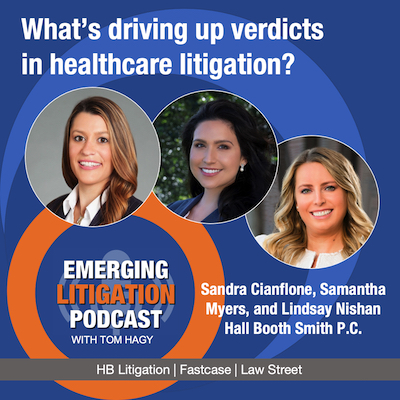

Emerging Litigation Podcast

The Intersection of Generative AI and the Legal Profession with Niki Black
In this episode, we discuss the current state and future of generative artificial intelligence and the practice of law with Nicole Black, attorney, legal tech journalist, and author. As she notes, "The legal field is one of the most likely to be impacted by generative AI because the technology can significantly replace certain workflows or assist with those workflows in impactful ways". Listen and learn more!

The Corporate Transparency Act: A New Effort to Fight Money Laundering with Lori Smith
In this episode, we discuss the Corporate Transparency Act (CTA) with Lori Smith of Stradley Ronon, including the key facets of the Act's requirements, potential penalties, and chances for litigation. As Lori notes, "the U.S. is one of the few countries in the world where you can form entities, and nobody can tell who owns them". The CTA aims to prevent this from being the case. Listen and learn more!

Litigators, YES Litigators: One Attorney’s Journey Within and Without the Legal Industry
In this episode, we discuss all the things one former litigator, Somya Kaushik, Senior Corporate Counsel at Mineral and Adjunct Professor of Law at Lewis & Clark Law School has done, and the advantages she feels a litigator can bring to a small company – one that isn’t embroiled in litigation (and would like to keep it that way). As she notes, "a litigator is well-positioned to identify actual but often overlooked legal risks, effectively mitigating issues and reducing both business and legal risks". Listen and learn more!
A Shameless Plug for Our Content Services
Your content marketing is everything you’ve ever dreamed of. Right?
 Sara is marketing director at a boutique law firm. When we asked her how their blog was going, she made a sad face. But then, we made Sara smile.*
Critical Legal Content was founded by Tom Hagy, former Editor & Publisher of Mealey’s Litigation Reports and VP at LexisNexis, founder of HB, current litigation podcaster and editor-in-chief. CLC’s mission is to help smaller firms and service providers not only create content — blogs, articles, papers, webinars, podcasts (like the stuff on this site) — but also to get it out there. How? Via social media, this website, your website, and potential via our podcast and journal which we publish in collaboration with vLex Fastcase and Law Street Media. The goal is to attract readers and dizzy them with your brilliance.
*Inspired by actual events.
Create content like a real legal publisher.
Emerging Litigation Journal

Facing PFAS lawsuit, Apple claims watch bands are safe, but what does the evidence say?
Amid rising concerns about toxic chemicals in consumer products, Apple finds itself under scrutiny. Guest contributor Justin Ward examines the controversy surrounding Apple’s smartwatch bands after researchers detected elevated levels of PFAS, or “forever chemicals.” While Apple insists its products are safe, a class action lawsuit alleges deceptive marketing and health risks, raising broader questions about accountability and chemical transparency in tech and apparel.

AI tool that summarizes evidence from cracked phones wades into uncharted constitutional waters
As law enforcement agencies adopt cutting-edge AI to process digital evidence, constitutional questions are quickly coming into focus. Guest contributor Justin Ward explores how Cellebrite’s new AI-driven tool—capable of scanning and summarizing entire phone contents—may clash with Fourth Amendment protections. While the tech promises efficiency, civil rights advocates argue it opens the door to warrantless digital dragnets, with court interpretations varying widely across jurisdictions.

Valid Antitrust Concerns or Partisan Objectives: Which Will Guide Trump’s FTC?
Concerned that the spirit of retribution that drove executive orders against some of the nation's largest law firms will carry over to business deals, Tom Hagy writes about recent changes at the Federal Trade Commission and some of the comments from the new chair that suggest infusion of retribution into the process of examining business deals is inevitable.
HB Webinars on CeriFi LegalEdge
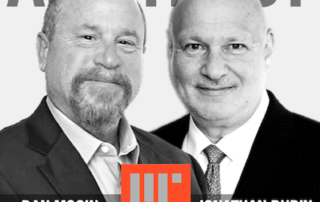
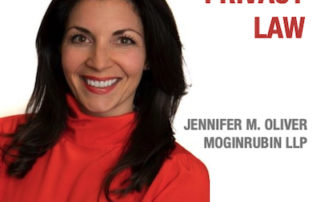
The Intersection of Antitrust & Privacy | A MoginRubin Webinar | 10.31.2019
[two-fifths-first] Recorded: Oct. 31, 2019 Duration: 100 minutes Presented by: MoginRubin LLP Produced by: HB Litigation Conferences The Panel Moderator Daniel J. Mogin | Managing Partner, MoginRubin LLP Speakers Jennifer M. Oliver, CIPP/US | Partner, MoginRubin LLP Thomas N. Dahdouh | Director, Western Region, Federal Trade Commission Franklin M. Rubinstein | Partner, Wilson Sonsini Goodrich & Rosati Randi W. Singer, CIPP/US, CIPT | Partner, Weil, Gotshal & Manges Contributor Dina Srinivasan | Independent Researcher & Author of The Antitrust Case Against Facebook Dina was unable to present but we thank her for her content contributions. What you will get: At least 1 hour of CLE credit. Answers to your questions via email. The opportunity to share with others on your team. The complete Powerpoint. The Antitrust Case Against Facebook Dina Srinivasan's statement to the House Committee on the Judiciary, Subcommittee on Antitrust, Commercial, and Administrative Law The Chicago Booth School Stigler Center Committee on Digital Platforms Final Report Write to us at CLE@LitigationConferences.com to: Ask about CLE Request the materials Send a question for the speakers [/two-fifths-first][three-fifths] Market Behavior and Data-Driven Market Power Highly publicized cases and investigations in the U.S. and Europe of big technology, e-commerce, and social media companies demonstrate how anti-competition laws are being used to scrutinize and challenge not only how these corporations conduct themselves in the marketplace, but the very core of their colossal success: the mass collection and utilization of user data. Are the privacy and antitrust worlds beginning to cross over? Or do they simply run parallel while addressing entirely different types of conduct? Whatever the answer, data is the raw material that drives the likes of Google, Facebook, Apple and Amazon, so how it is handled is a critical question when counseling clients on mergers and acquisitions. Meanwhile, there is increasing pressure on antitrust enforcers to consider privacy issues when conducting merger reviews. Antitrust laws [...]







Settlement Psychology: Who is in Control? Homer Simpson or Mr. Spock? | Complimentary Webinar
Settlement Psychology Who's in charge? Homer Simpson or Mr. Spock? Cognitive obstacles to finding common ground. [two-fifths-first] Complimentary On-Demand Webinar From HB! 1 CLE credit CLE questions? CLE@LitigationConferences.com Questions for speakers? Questions@LitigationConferences.com SPEAKERS Jeff Trueman Mediator / Negotiator John Philip Miller Baltimore City Circuit Judge (ret.) This course is also available via the West LegalEdcenter. [/two-fifths-first] [three-fifths] Improve your negotiation strategy and outcomes. Mediator, arbitrator and settlement conference neutral Jeff Trueman says the lawyer’s mind can sometimes play tricks on them when it comes time to settle a claim. “The central question on the minds of counsel, their clients, and insurance professionals in civil litigation is, of course, ‘What’s the case worth?’ For mature torts there is enough historical settlement and verdict data exist for counsel to argue why a particular case should or should not fit within a certain settlement range. In the midst of these discussions, the human brain plays tricks on us. For example, litigators sometimes assume that their trial experience can determine how jurors will negotiate with one another and resolve factual discrepancies after closing arguments. This assumption is a ‘heuristic’ – a cognitive shortcut called attributional error or illusion of control.” Backed by his decades of psychological and economic sciences research, Trueman says there is a lot of room for attorneys to change their mindset when moving into settlement mode. Litigation Chicken “When differences over case value intensify, litigators return to threats of relinquishing control: ‘Maybe we have to try this case;’ or ‘We feel good about our chances in front of a jury.’ Underneath the games of litigation chicken that are the hallmark of settlement negotiation, heuristics lead to erroneous valuations and assessments of risk.” He says attorney would be well served, and would serve their clients well, if they make adjustments depending on their role at a given point in [...]
PFOA: Science & Litigation | 11/15/2018
[one-third-first] DATE: Nov. 15, 2018 TIME: 2 p.m. EDT; 1 p.m. CDT; 12 p.m. MDT; 11 a.m. PDT PLACE: Your computer or mobile device PRICE: $197* per dial-in site *Price is good through Oct. 31. After that it's $247. GROUPS ARE GOOD: Registering qualifies you to multiple attendees at your location. CLE: 1 credit Please send CLE questions to CLE@LitigationConferences.com speakers Michael Dourson, Ph.D., DABT, FATS, FSRA Director of Science Toxicology Excellence for Risk Assessment (TERA) Register now and get: Access for multiple colleagues at your location. Practical insights from a board-certified toxicologist. A through and informative PowerPoint presentation for later reference. Answers to your questions via live chat. CLE credit. And more! [/one-third-first] [two-thirds] PFOA Toxicology: What's a Safe Level for the Environment? What toxic tort and environmental attorneys need to know about this ubiquitous compound. Perfluorooctanoic acid (PFOA) has been described as more toxic than methyl mercury. Yet not all organizations tasked with developing safe-dose levels agree on the best approach for PFOA, resulting in recommended levels that are more than 100-times apart. Differences in these recommended safe-dose levels result in cleanup costs that vary by billions of dollars. Background Environmental contamination with PFOA has been known for some time. In the early 2000s safe doses in drinking water were considered to be in the range of 30-to-50 parts per billion. Recent safe-dose assessments by EPA, ATSDR and several states have significantly lowered these safe doses to parts-per-trillion measurements. PFOA, also known as C8, is used to make Teflon® and similar chemicals known as fluorotelomers. According to the American Cancer Society, PFOA is “burned off during the [manufacturing] process and is not present in significant amounts in the final products.” However, the American Cancer Society says, “PFOA has the potential to be a health concern because it can stay in the environment and in the human body for long periods of time. Studies have found that it is present worldwide at [...]
Content Partners