


Emerging Litigation Podcast

Litigation Prognostication with Dan Rabinowitz
In this episode, Dan Rabinowitz, Co-Founder and CEO of Pre/Dicta, discusses how the power of technology will make predicting litigation as commonplace as predicting the weather. He also shares insights into a study Pre/Dicta conducted that tested assumptions about judges based on their political affiliations. Listen and learn!

Technology-Assisted Review: Sara Lord Interviews Data Scientist Lenora Gray
In this episode, Sara Lord of Legal Metrics speaks with Lenora Gray of Redgrave Data about eDiscovery in the practice of litigation and how it has been transformed by technology-assisted review tools – or TAR, and how these tools work. Every litigator needs to understand how eDiscovery tools work. They should be able to answer questions around the approach being used, why that approach was chosen, the reliability of the assisted review, what human oversight was implemented, and more. Listen and learn. PLUS: Watch the video for outtakes and bonus content!

Jury Selection in the Age of Conspiracy Theories and Distrust with Tara Trask
In this episode, we discuss picking juries in an age of misinformation, general distrust, tribalism, unleashed social media surfers, and unorthodox legal strategies unfolding on a daily basis with Tara Trask of Trask Consulting, jury and trial expert. "Jury service is an opportunity for everyday Americans to interact with an important institution, our courts, and play their part as citizens,"Trask says. "The court system could very well be our saving grace in trying to hang on to our democracy." Listen now.
A Shameless Plug for Our Content Services
Your content marketing is everything you’ve ever dreamed of. Right?
 Sara is marketing director at a boutique law firm. When we asked her how their blog was going, she made a sad face. But then, we made Sara smile.*
Critical Legal Content was founded by Tom Hagy, former Editor & Publisher of Mealey’s Litigation Reports and VP at LexisNexis, founder of HB, current litigation podcaster and editor-in-chief. CLC’s mission is to help smaller firms and service providers not only create content — blogs, articles, papers, webinars, podcasts (like the stuff on this site) — but also to get it out there. How? Via social media, this website, your website, and potential via our podcast and journal which we publish in collaboration with vLex Fastcase and Law Street Media. The goal is to attract readers and dizzy them with your brilliance.
*Inspired by actual events.
Create content like a real legal publisher.
Emerging Litigation Journal

Judge finds flaws in motion for an injunction against Trump’s wind turbine order
While Trump’s freeze on offshore wind permits faces legal challenge, a federal judge isn’t convinced the states bringing the case have shown enough harm. In this article, guest contributor Justin Ward explains why the motion for an injunction was denied, what it means for the broader battle over renewable energy, and how executive power could stall green infrastructure without ever breaking the law.

Class action alleges Ziploc misled consumers about harmful microplastics in its products
Amid rising concerns about toxic chemicals in consumer products, Apple finds itself under scrutiny. Guest contributor Justin Ward examines the controversy surrounding Apple’s smartwatch bands after researchers detected elevated levels of PFAS, or “forever chemicals.” While Apple insists its products are safe, a class action lawsuit alleges deceptive marketing and health risks, raising broader questions about accountability and chemical transparency in tech and apparel.

What DEI Changes Mean for Employers Featuring Patice Holland
As political and public scrutiny of Diversity, Equity, and Inclusion (DEI) programs grows, employment attorney Patice Holland of WoodsRogers joins the Emerging Litigation Podcast to explain how employers—especially federal contractors—can reassess DEI initiatives while staying compliant with discrimination laws, navigating shifting enforcement priorities, and managing legal, operational, and reputational risk. Tune in now!
HB Webinars on CeriFi LegalEdge

Organizational Values & Business Risks: Properly Balancing Stakeholder Concerns
Accommodations. Appropriate accommodation for high-risk employees or employees with family members who are at a heightened risk. Mitigation. Attention to means of mitigating transmission and infection. Tracing. Contact tracing and management of data collected, including health data, as well as responses to employees who refuse to report. Patient Sensitivity. Duty to avoid discrimination and stigmatization. Preparedness. Developing plans to address possibility of re-occurrence in the fall and managing possible outbreaks in company’s offices. On-demand on the Thomson Reuters West LegalEdcenter as part of the HB catalog. Organizational Values & Coronavirus Business Risks: Properly Balancing Stakeholder Concerns Produced for Emory University Center for Ethics by HB Litigation Conferences The current pandemic confronts businesses, nonprofit organizations, governments, and the legal profession with innumerable ethical challenges. Management issues and liability concerns, stakeholder demands and legal duties become even more complex in an environment of uncertainty and one where the consequences could result in serious illness or even death. This program seeks to engage the participants in thinking through these challenges and developing processes of ethical response to them. Managers must acknowledge and address the framework of fear associated with the pandemic, ranging from fear of contagion and death to fears of unemployment, childcare, and the duties of home-schooling. Additionally, as the economy reopens there must be serious attention to the processes of doing so. Join Professor Edward L. Queen from Emory University for invaluable insights. Emory's medical team was on the frontline of the 2014-2016 Ebola epidemic, which began in December 2013 when an 18-month-old Guinean boy contracted the disease. According to the CDC, the outbreak ended with more than 28,600 cases and 11,325 deaths. Eleven people were treated for Ebola in the United States. Edward L. Queen Director of Ethics and Servant Leadership Emory University Professor Edward L. Queen Edward L. Queen is director of [...]

Contract Drafting Fundamentals
Register Now Contract Drafting Fundamentals: What I Wish They Taught Me in Law School Speaker: Will Marshall | Partner UBM Law LLP Date: Thursday | July 23, 2020 Time: 2pm ET 1pm CT 12pm MT 11am PT Duration: 75 minutes Price: Early Bird Registration: $75 After July 14: $95 Special: Complimentary with discount code! What you get: CLE credit Course materials Webinar recording Answers to your questions! Contact CLE Manager Get practical insights on contract drafting. For new and seasoned attorneys alike, this 75-minute program will cover core, practical aspects of contract drafting, including a broad range of fundamental concepts, skills, and tips. The program is designed to make you a more deliberate drafter and improve your ability to assess the purpose and effectiveness of each provision in your contract. We will discuss not only what is on the page, but external dynamics that affect drafting and negotiation. Finally, we will reserve time to answer your questions. I am offering this program for free to my network to help you develop these foundational skills. If you haven't received it, please contact me directly for the complimentary pass code. -- Will Marshall, Partner, UBM Law Group LLP Key topics: The goals and challenges of good drafting. The anatomy and building blocks of a contract. Categories of contract language. Typical sources of ambiguity. Tips on everything from file naming conventions to how to draft a nested signature block and what a tipping basket is. Your questions via live chat or by email before or and after the event. Send Will a Question Meet our panelist. Will Marshall | Partner UBM Law Group, LLC Will is a co-founder of UBM Law Group. He has substantial experience in drafting and negotiating a wide range of commercial contracts, including [...]


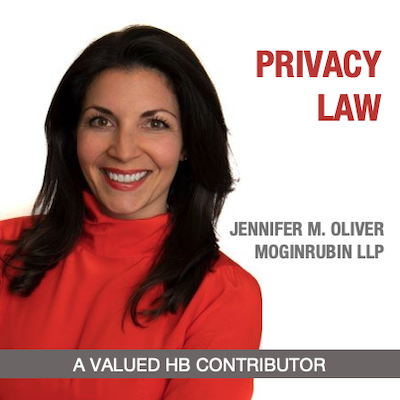








The Intersection of Antitrust & Privacy | A MoginRubin Webinar | 10.31.2019
[two-fifths-first] Recorded: Oct. 31, 2019 Duration: 100 minutes Presented by: MoginRubin LLP Produced by: HB Litigation Conferences The Panel Moderator Daniel J. Mogin | Managing Partner, MoginRubin LLP Speakers Jennifer M. Oliver, CIPP/US | Partner, MoginRubin LLP Thomas N. Dahdouh | Director, Western Region, Federal Trade Commission Franklin M. Rubinstein | Partner, Wilson Sonsini Goodrich & Rosati Randi W. Singer, CIPP/US, CIPT | Partner, Weil, Gotshal & Manges Contributor Dina Srinivasan | Independent Researcher & Author of The Antitrust Case Against Facebook Dina was unable to present but we thank her for her content contributions. What you will get: At least 1 hour of CLE credit. Answers to your questions via email. The opportunity to share with others on your team. The complete Powerpoint. The Antitrust Case Against Facebook Dina Srinivasan's statement to the House Committee on the Judiciary, Subcommittee on Antitrust, Commercial, and Administrative Law The Chicago Booth School Stigler Center Committee on Digital Platforms Final Report Write to us at CLE@LitigationConferences.com to: Ask about CLE Request the materials Send a question for the speakers [/two-fifths-first][three-fifths] Market Behavior and Data-Driven Market Power Highly publicized cases and investigations in the U.S. and Europe of big technology, e-commerce, and social media companies demonstrate how anti-competition laws are being used to scrutinize and challenge not only how these corporations conduct themselves in the marketplace, but the very core of their colossal success: the mass collection and utilization of user data. Are the privacy and antitrust worlds beginning to cross over? Or do they simply run parallel while addressing entirely different types of conduct? Whatever the answer, data is the raw material that drives the likes of Google, Facebook, Apple and Amazon, so how it is handled is a critical question when counseling clients on mergers and acquisitions. Meanwhile, there is increasing pressure on antitrust enforcers to consider privacy issues when conducting merger reviews. Antitrust laws [...]
Content Partners